The record in brief The chaparral 2j was a groundbreaking 1970 Can-Am sports racing car developed by Jim Hall that utilized active dual suction fans powered by an auxiliary engine to create a vacuum beneath the chassis, generating immense aerodynamic downforce independent of vehicle road speed.
Aerodynamic downforce in motorsport is conventionally generated by moving air across angled aerofoils or through shaped underbody venturi tunnels, meaning that grip increases only as vehicle speed rises. In 1970, visionary engineer Jim Hall introduced the chaparral 2j, creating a radical active suction system that decoupled downforce from road velocity entirely. Examining the engineering of the sucker car and its Formula One successor, the Brabham BT46B, reveals how fan technology pushed the boundaries of automotive performance and sporting rulebooks.
- Constant vacuum downforce: The Chaparral 2J generated approximately one thousand pounds of downforce even while standing stationary on the starting grid.
- Dual-engine architecture: A 7.6-liter Chevrolet V8 powered the rear drive wheels, while a separate 274cc two-stroke snowmobile engine drove twin seventeen-inch extraction fans.
- Articulated Lexan skirts: Spring-loaded polycarbonate side and rear skirts linked directly to the suspension maintained an unbroken vacuum seal over track undulations.
- Regulatory intervention: Following rival team protests, the Sports Car Club of America (SCCA) and the FIA banned suction fan systems as illegal movable aerodynamic devices.
How Did Jim Hall Engineer the Chaparral 2J Sucker Car?
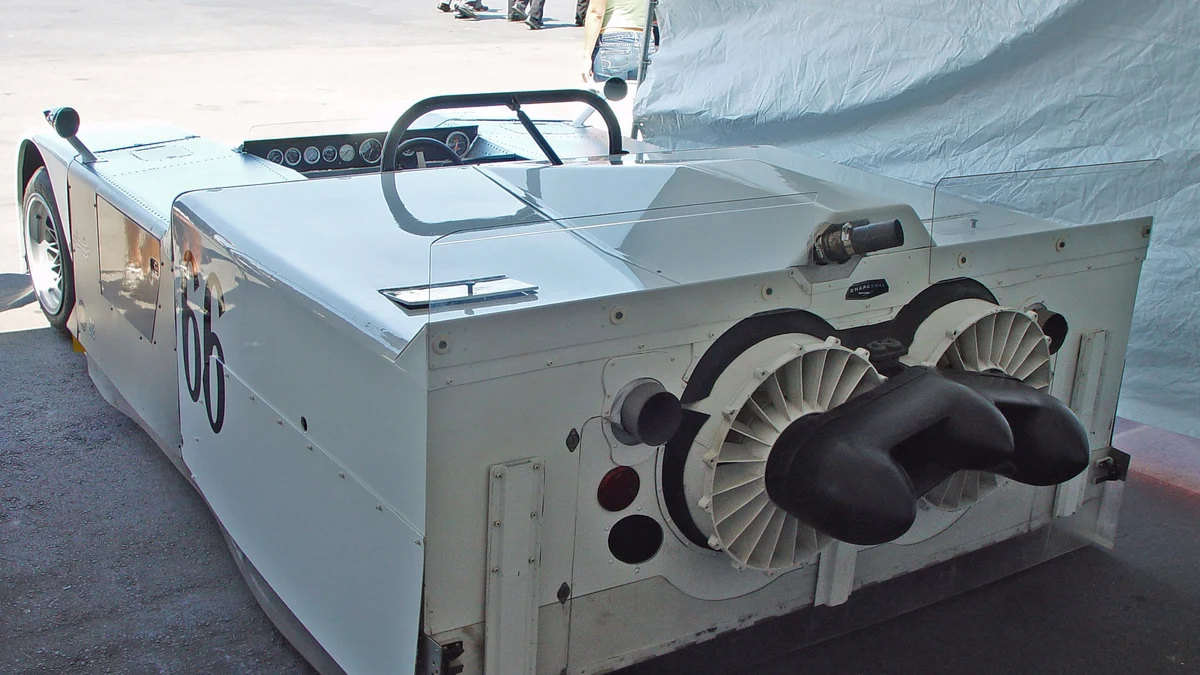
Jim Hall engineered the chaparral 2j by enclosing the lower chassis with flexible skirts and mounting two seventeen-inch axial fans at the rear to evacuate air continuously. Powered by an auxiliary two-cylinder engine, the fans created an intense partial vacuum beneath the vehicle.
Unlike conventional wings that produced excessive aerodynamic drag on straights and failed to generate sufficient grip in slow corners, the suction fans provided immediate downforce at zero miles per hour.
The vehicle incorporated several novel mechanical systems:
- Dual-powertrain configuration: A 7.6-liter Chevrolet big-block V8 provided wheel propulsion, while a 274cc two-stroke engine powered the suction fans.
- Military extraction fans: Twin seventeen-inch axial fans evacuated air at high volume from beneath the chassis.
- Semi-automatic transaxle: A three-speed torque-converter transmission reduced driver shifting workload during intense lateral G cornering.
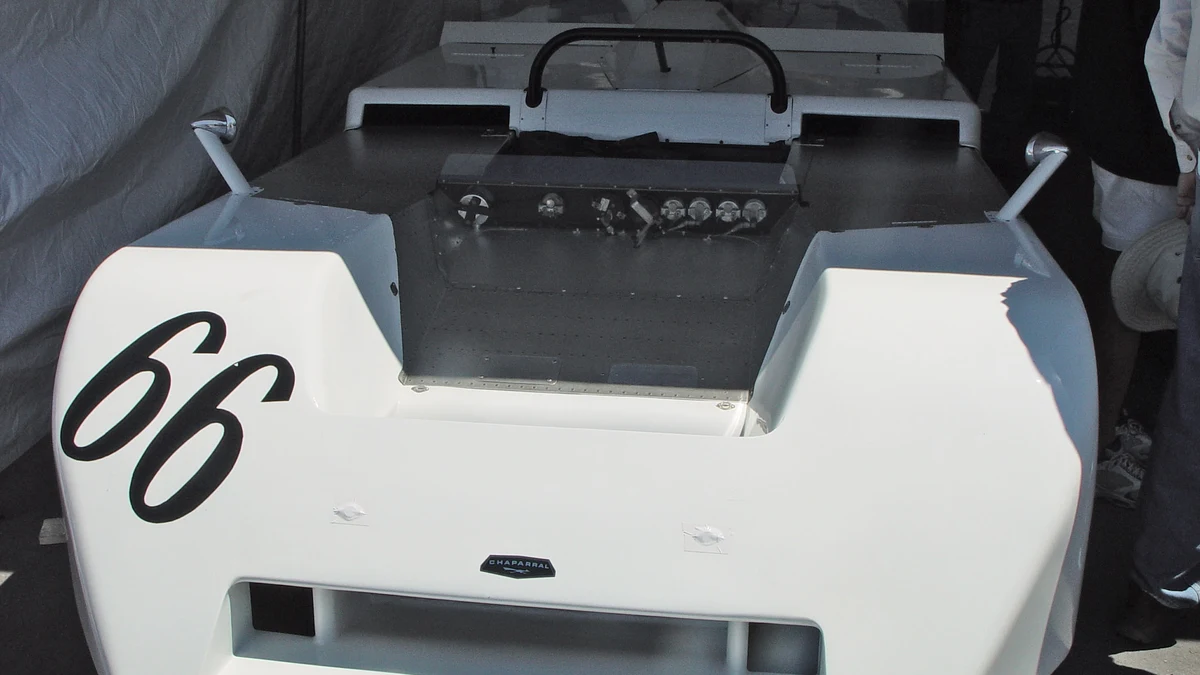
- Sealed underbody tub: An enclosed belly pan channeled extracted air exclusively through the rear fan exhaust housing.
During testing at Rattlesnake Raceway in Midland, Texas, the 2J demonstrated lateral cornering forces exceeding 1.5 Gs, setting qualifying lap times up to two seconds faster than factory McLaren entries.
On the record: Historical archives of the Sports Car Club of America confirm that driver Jackie Stewart qualified the 2J third on its competition debut at Watkins Glen in July 1970 before auxiliary engine vapor lock forced retirement.
How Did Articulated Skirts Maintain the Underbody Vacuum Seal?
Articulated skirts maintained the underbody vacuum seal by using spring-loaded General Electric Lexan polycarbonate panels connected via mechanical linkages directly to the suspension uprights. This suspension linkage ensured that skirt edges remained precisely one-quarter inch above the asphalt regardless of vehicle pitch or roll.
The skirts enclosed the entire rear section of the vehicle, running along both side rocker sills and sealing against a vertical rear panel beneath the extraction fans.
Because Lexan possessed high impact strength and low friction, the skirt tips could slide over bumps without shattering. If the chassis bounced over a curb, the suspension linkages pushed the skirts down instantaneously to maintain the critical vacuum boundary layer.
For more technical context on how passive ground effect venturi tunnels developed after fan bans, explore our detailed analysis of ground effect f1 or review Grand Prix technical rules in f1 car evolution.
Why Did Rival Teams Protest and Force the SCCA Ban?
Rival teams protested the 2J because its speed advantage threatened to render conventional Can-Am cars obsolete, while competitors claimed the rear extraction fans ejected dangerous stones and track debris into trailing cockpits.
Led by McLaren team principal Teddy Mayer, rival entrants petitioned the SCCA technical committee to declare the suction system illegal. Competitors cited Article 252 of the FIA International Sporting Code, which strictly forbade movable aerodynamic devices that influenced vehicle performance.
While Jim Hall argued that the fans were mechanical air pumps rather than aerofoils, the SCCA bowed to manufacturer pressure at the conclusion of the 1970 season, ruling that fans could not be used for aerodynamic purposes in 1971 and banning the car permanently.
How Did Gordon Murray Re-Engineer the Concept with the Brabham BT46B?
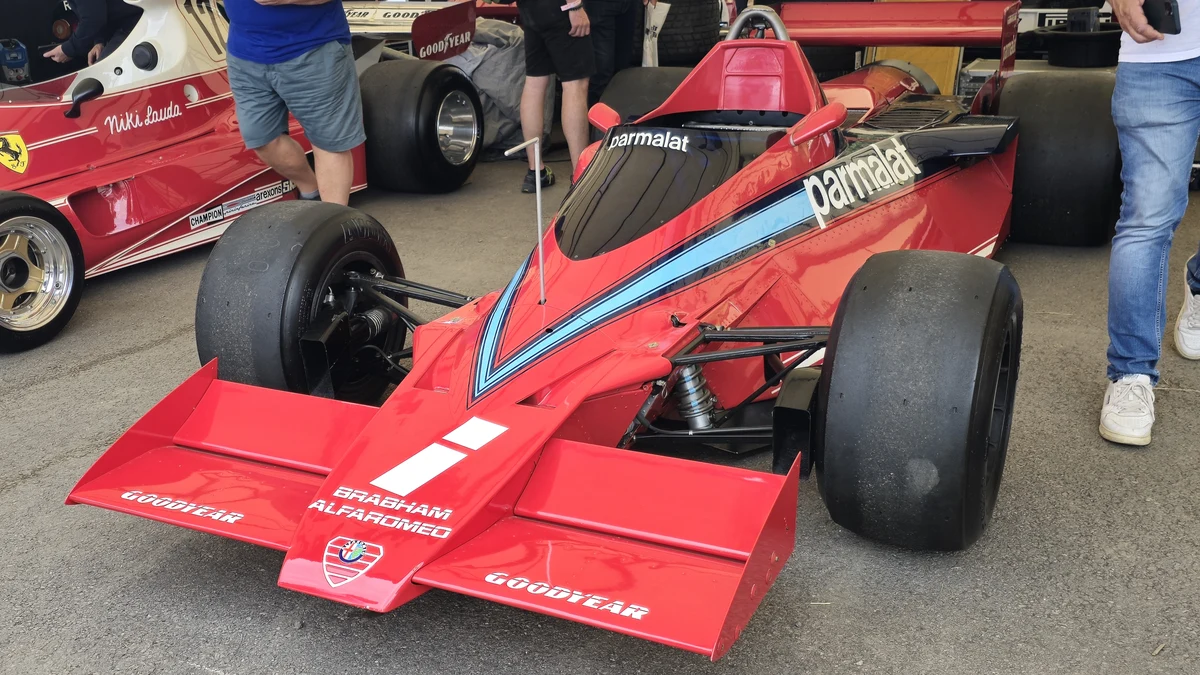
Gordon Murray re-engineered the concept with the Brabham BT46B in 1978 by driving a single central fan directly off the primary Alfa Romeo flat-12 engine, legally claiming the device served primarily to cool a horizontal engine radiator.
Facing the dominant ground-effect Lotus 79, Murray could not shape venturi floor tunnels because Brabham wide flat-12 engine blocked the underbody. Murray noticed that the FIA rulebook permitted fans if their primary function was mechanical cooling.
Murray mounted a massive horizontal radiator above the engine bay and installed a clutch-driven rear fan behind it. The design sealed the underbody with sliding skirts. Scrutineers approved the car because more than fifty percent of air passing through the fan cooled the radiator, while the remaining volume created immense underbody vacuum.
At the 1978 Swedish Grand Prix at Anderstorp, Niki Lauda drove the BT46B to a crushing 34.6-second victory. Amid fierce political backlash from rival constructors, Brabham team owner Bernie Ecclestone voluntarily withdrew the fan car from future competition to preserve political unity within the Formula One Constructors Association.
| Technical Parameter | Chaparral 2J (1970) | Brabham BT46B (1978) |
|---|---|---|
| Racing Series | SCCA Canadian-American Challenge Cup | FIA Formula One World Championship |
| Fan Propulsion System | Separate 274cc 2-stroke auxiliary engine | Direct mechanical drive from Alfa Romeo V12 |
| Fan Configuration | Twin 17-inch rear axial extraction fans | Single large multi-blade central extraction fan |
| Underbody Skirt Material | GE Lexan polycarbonate with suspension links | Sliding composite side skirts with spring seals |
| Primary Legal Defense | Active fluid suction pump system | Engine cooling device (>50% airflow) |
| Competition Record | 4 races, 3 pole positions, 0 wins (Reliability) | 1 race, 1 victory (1978 Swedish Grand Prix) |
| Regulatory Outcome | Banned by SCCA/FIA at end of 1970 | Voluntarily withdrawn post-victory / Banned by CSI |
Source: Historical technical archives of Chaparral Cars and Motor Sport Magazine Grand Prix reports.
What Is the Continuing Technological Legacy of Fan Downforce?
The continuing technological legacy of fan downforce persists in modern hypercar engineering and experimental speed record machines. Designers Gordon Murray and Adrian Newey have revived active underbody suction on modern track supercars.
In 2020, Gordon Murray Automotive unveiled the T.50 supercar, featuring a rear 400mm active aerodynamic fan driven by a 48-volt motor to manipulate underbody boundary layers without requiring heavy wings. Similarly, the McMurtry Spéirling fan car established the all-time hillclimb record at the Goodwood Festival of Speed in 2022, proving that Jim Hall 1970 vacuum concept remains the most effective method of generating instantaneous mechanical grip.
To explore more classic competition rules and engineering breakthroughs, visit our overview of f1 car evolution or browse the complete Cars and Rulebooks archive.
How we researched this: This comparative study was compiled from engineering documentation preserved by the Petroleum Museum Chaparral Gallery in Midland, Texas, contemporary race reports in Motor Sport Magazine and Road and Track from 1970 to 1978, and published technical papers by Gordon Murray.
From the archive mailbag
Why did the Chaparral 2J have two engines?
The Chaparral 2J used a large 7.6-liter Chevrolet V8 to drive the rear wheels, and a separate two-cylinder 274cc snowmobile engine running at constant high revolutions to power the dual suction fans independently of car speed.
Did the Brabham fan car ever race again after winning?
No. While the Brabham BT46B won its only race at the 1978 Swedish Grand Prix, team owner Bernie Ecclestone voluntarily withdrew the car to prevent a political fracture among Formula One constructors, and the CSI subsequently banned fan cars permanently.
How much downforce did the Chaparral 2J produce?
The Chaparral 2J generated approximately one thousand pounds of constant downforce across its entire underside, providing maximum tire suction even when starting from a standstill.
Why were suction fans banned in racing?
Suction fans were banned under rules prohibiting movable aerodynamic devices that influenced performance, and due to competitor concerns regarding costs and debris ejected from rear fan outlets.
Who drove the Chaparral 2J in competition?
Formula One World Champions Jackie Stewart and Vic Elford drove the Chaparral 2J during the 1970 Can-Am championship season, setting blistering qualifying lap times at Watkins Glen, Road Atlanta, and Riverside.