The record in brief The connection between moonshine nascar roots and early stock car racing is a documented historical reality. Appalachian bootleggers modified production cars with high-performance engines and reinforced suspensions to evade revenue agents, establishing mechanical innovations and driving talent that directly founded NASCAR in 1948.
American stock car racing holds one of the most distinctive origin stories in global motorsport. Unlike European Grand Prix competition born from wealthy aristocratic automotive clubs, NASCAR emerged directly from rural mechanics and illicit mountain transport in the American South. Examining the history of moonshine nascar connections separates romantic Hollywood folklore from documented mechanical innovation and organizational reality.
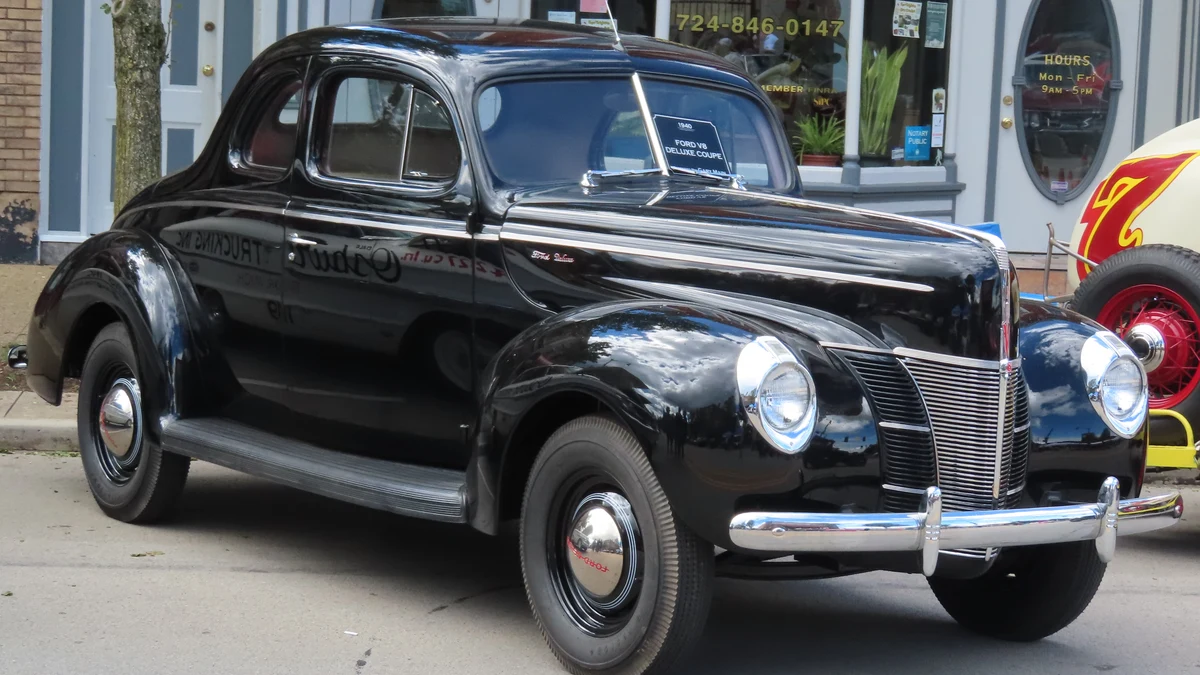
- The bootlegger vehicle of choice: The 1940 Ford Coupe powered by the Flathead V8 became the industry standard due to its generous trunk capacity and durable suspension.
- Mechanical innovations: Bootleggers pioneered heavy-duty auxiliary leaf springs, dual-carburetor manifolds, and dropped front axles to carry heavy liquid cargo across rough dirt roads without body sag.
- Pioneering racing figures: Early championship team owner Raymond Parks, master mechanic Red Vogt, and driver Junior Johnson honed their mechanical and driving skills running illicit mountain routes.
- Formal codification: Bill France Sr. organized informal pasture races into a professional sanctioning body at the Streamline Hotel in Daytona Beach in December 1947.
How Did Southern Whiskey Runners Create Moonshine NASCAR Machinery?
Southern whiskey runners created moonshine nascar machinery by heavily modifying factory passenger sedans to transport illegal liquor rapidly while maintaining completely stock exterior appearances. Vehicles needed sufficient speed to outrun federal revenue agents on unpaved mountain roads while bearing hundreds of pounds of cargo.
During the Prohibition era and subsequent local-option dry laws across the American South, illicit distillers in the Appalachian mountains of North Carolina, Georgia, and Tennessee required fast transport to deliver un-taxed whiskey to urban distribution hubs like Atlanta and Charlotte.
Drivers known as trippers or runners purchased standard production cars, predominantly 1939 and 1940 Ford Coupes. Mechanics modified these vehicles to maximize cargo space and acceleration while ensuring the car appeared completely ordinary from the outside to avoid suspicion from law enforcement.
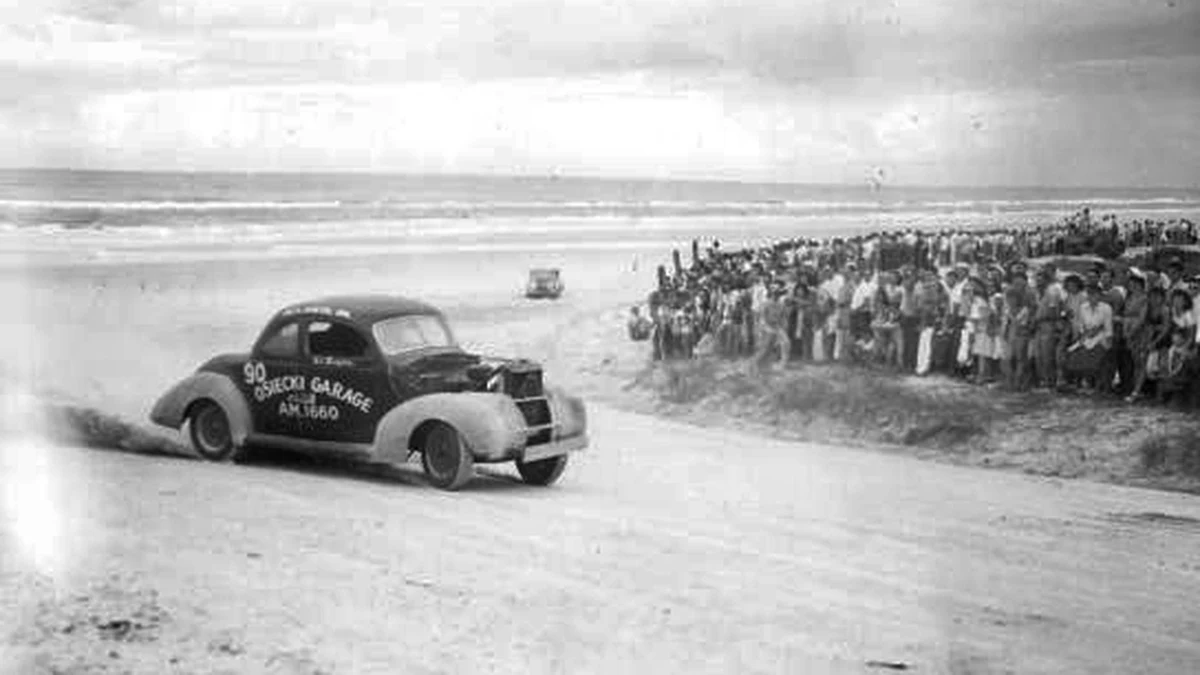
On weekends, proud bootleggers gathered in local pastures and fairground dirt tracks to wager on who owned the fastest car and best driving skills, establishing the grassroots racing culture that preceded organized championship series.
On the record: Historical records from the NASCAR Hall of Fame document that inaugural hall of fame inductee Junior Johnson was convicted in 1956 for operating an illegal whiskey still before receiving a full presidential pardon from Ronald Reagan in 1986.
What Mechanical Modifications Did Bootleggers Pioneer for Speed?
Bootleggers pioneered modifications including multi-carburetor intake manifolds, bored engine cylinders, high-lift camshafts, and reinforced auxiliary rear leaf springs. These engineering changes allowed a car carrying eighty gallons of liquor to maintain high speeds over rugged terrain.
The core of bootlegger engineering centered on the Ford 221 and 239 cubic inch Flathead V8 engine. Master mechanics like Red Vogt ported intake runners, milled cylinder heads to raise compression ratios, and installed high-flow dual Stromberg 97 carburetors to extract maximum horsepower.
Chassis modifications were equally critical for survival:
- Auxiliary spring packing: Mechanics installed extra leaves in the rear transverse leaf spring and inserted heavy rubber spacers to keep the car level when loaded with six hundred pounds of glass jars.
- Headlight kill switches: Dashboard toggle switches allowed drivers to extinguish rear tail lights or front headlamps independently while evading pursuit on pitch-black back roads.
- Passenger seat removal: Mechanics stripped the front passenger and rear bench seats, installing smooth plywood floorboards to maximize storage capacity for liquor crates.
- High-volume fuel tanks: Custom oversized fuel cells extended vehicle driving range without requiring stops at public service stations.
For additional reading on stock car engineering history, explore our analysis of the winged plymouth superbird or review flag marshaling rules in racing flags meaning.
What Was the Bootlegger Turn and How Did It Transform Driving?
The bootlegger turn was a driving maneuver where an operator executed a sudden 180-degree direction reversal on a narrow two-lane road at speed using the mechanical emergency brake. This technique allowed runners to escape oncoming police roadblocks instantly.
To execute the maneuver, a driver approaching a roadblock or narrow bridge tapped the brakes, cut the front wheels sharply into a slide, dumped the clutch, and yanked the floor-mounted mechanical handbrake to lock the rear wheels.
The car rotated violently across its axis in a controlled slide. As the vehicle swung 180 degrees, the driver released the handbrake, engaged second gear, and applied full throttle, accelerating in the opposite direction before pursuers could turn around.
This car-control expertise transferred directly to dirt-track racing. Drivers entered flat, unbanked clay corners in a deliberate power-slide (pitching the car sideways), utilizing throttle steering and weight transfer to maintain momentum around loose turns.
How Did Raymond Parks and Red Byron Win the First NASCAR Title?
Raymond Parks and Red Byron won the first NASCAR title by pairing professional moonshine capital and master mechanical tuning with disciplined racecraft. Parks financed the operation, Red Vogt prepared the cars, and World War II veteran Red Byron drove to victory.
Raymond Parks had built a prosperous distribution business in Atlanta, using his earnings to fund the premier racing team of the late 1940s. Parks hired mechanical genius Red Vogt, whose Atlanta speed shop was renowned for preparing the fastest bootlegger machinery in the state.
In 1948, driving Parks modified 1939 Ford Coupe, Red Byron won the inaugural NASCAR Modified Division championship. In 1949, when NASCAR introduced the Strictly Stock division (the precursor to the modern Cup Series), Byron drove Parks Oldsmobile 88 to two victories and captured the inaugural premier championship.
| Historical Category | Popular Folklore / Hollywood Myth | Documented Historical Reality |
|---|---|---|
| Driver Background | Every early stock car driver was an active moonshine runner | Many top drivers were moonshiners, but others were mechanics, farmers, and military veterans |
| Race Organization | Races were purely spontaneous illegal street challenges | Organized fairground and beach contests existed from the 1930s under regional promotional rules |
| Vehicle Appearance | Rally cars were beat-up jalopies held together by wire | Cars were meticulously maintained, immaculate showroom sedans to avoid police attention |
| Engine Technology | Primitive backyard junkyard modifications | Sophisticated dyno tuning, ported manifolds, and custom camshaft grinds by master mechanics |
| Founding Leadership | Moonshiners created NASCAR to race among themselves | Businessman Bill France Sr. codified regulations to eliminate promoter corruption and ensure safety |
Source: Archives of the NASCAR Hall of Fame and the Smithsonian National Museum of American History.
How Did Bill France Sr. Transform Mountain Contests into NASCAR?
Bill France Sr. transformed mountain contests into NASCAR by establishing standardized technical rules, guaranteed prize purses, and a unified championship points system. France recognized that informal promoter promotions frequently defrauded drivers and alienated spectators.
In December 1947, France gathered thirty-five drivers, mechanics, and car owners for a multi-day conference at the Streamline Hotel in Daytona Beach, Florida. The group established the National Association for Stock Car Auto Racing (NASCAR) on February 21, 1948.
France insisted on strict technical regulations that ensured competition remained centered on authentic American passenger vehicles. By transitioning from open-cockpit modifieds to the Strictly Stock division in 1949, NASCAR created a format that allowed automobile manufacturers to market showroom vehicles directly through racetrack success.
To explore more American stock car history, read our detailed comparison of the plymouth superbird, or browse the complete Stock Car History archive.
How we researched this: This historical investigation was compiled from archival documents preserved by the NASCAR Hall of Fame, oral history interviews collected by the Smithsonian National Museum of American History, and period newspaper accounts from the Atlanta Constitution and Daytona Beach Morning Journal from 1938 to 1950.
From the archive mailbag
Was NASCAR started by moonshiners?
Yes, in large part. Early stock car mechanics, car owners like Raymond Parks, and drivers like Junior Johnson developed their driving skills and vehicle modifications while transporting illicit whiskey before NASCAR was formally incorporated in 1948.
What car did early moonshine runners prefer?
The 1940 Ford Coupe was the preferred vehicle for moonshine runners due to its Flathead V8 engine, strong chassis, large trunk capacity, and predictable handling over rough dirt roads.
Who won the very first NASCAR premier series championship?
Red Byron won the inaugural 1949 NASCAR Strictly Stock championship driving an Oldsmobile 88 owned by Raymond Parks and prepared by mechanic Red Vogt.
Where was NASCAR officially founded?
NASCAR was officially founded at the Streamline Hotel in Daytona Beach, Florida, during a historic meeting organized by Bill France Sr. in December 1947, and formally incorporated in February 1948.
What was the famous bootlegger turn?
The bootlegger turn was a high-speed driving technique where the driver locked the rear mechanical handbrake and cut the front wheels to spin the car 180 degrees on a narrow dirt road, escaping roadblocks in the opposite direction.