The record in brief The le mans start was a traditional motorsport starting procedure used at the 24 Hours of Le Mans from 1925 to 1969, where drivers sprinted across the track to board their parked vehicles, start the engines, and merge into traffic without initial safety harness restraints.
For more than four decades, the opening seconds of the world greatest endurance race presented one of the most theatrical spectacles in automotive competition. Drivers stood lined up opposite the pit wall, waiting for the signal to sprint across live asphalt, fire their engines, and accelerate into the first chicane. Understanding the complete history of the le mans start requires analyzing why race organizers introduced the procedure, how engineering adaptations developed around it, and why escalating vehicle speeds eventually forced a safety transformation.
- Road car testing origin: The Automobile Club de l’Ouest introduced the running start in 1925 to evaluate vehicle ergonomics, starting reliability, and practical roadworthiness.
- Engineering adaptations: Porsche placed its ignition key to the left of the steering wheel so drivers could engage the starter with the left hand while simultaneously shifting into gear with the right.
- The lethal safety hazard: To save valuable seconds, drivers accelerated onto the high-speed Circuit de la Sarthe without fastening their safety harnesses, attempting to buckle belts at over one hundred and fifty miles per hour.
- The Jacky Ickx protest: In 1969, Belgian driver Jacky Ickx walked across the track in protest, strapped in securely, started dead last, and won the race, forcing the abolition of the running start.
Why Did the ACO Introduce the Le Mans Start in 1925?
The Automobile Club de l’Ouest introduced the le mans start in 1925 to simulate real-world touring utility and test automotive starting reliability. Early regulations required drivers to sprint to their production-derived vehicles, raise a folding weather hood, start the engine, and complete mandatory opening laps.
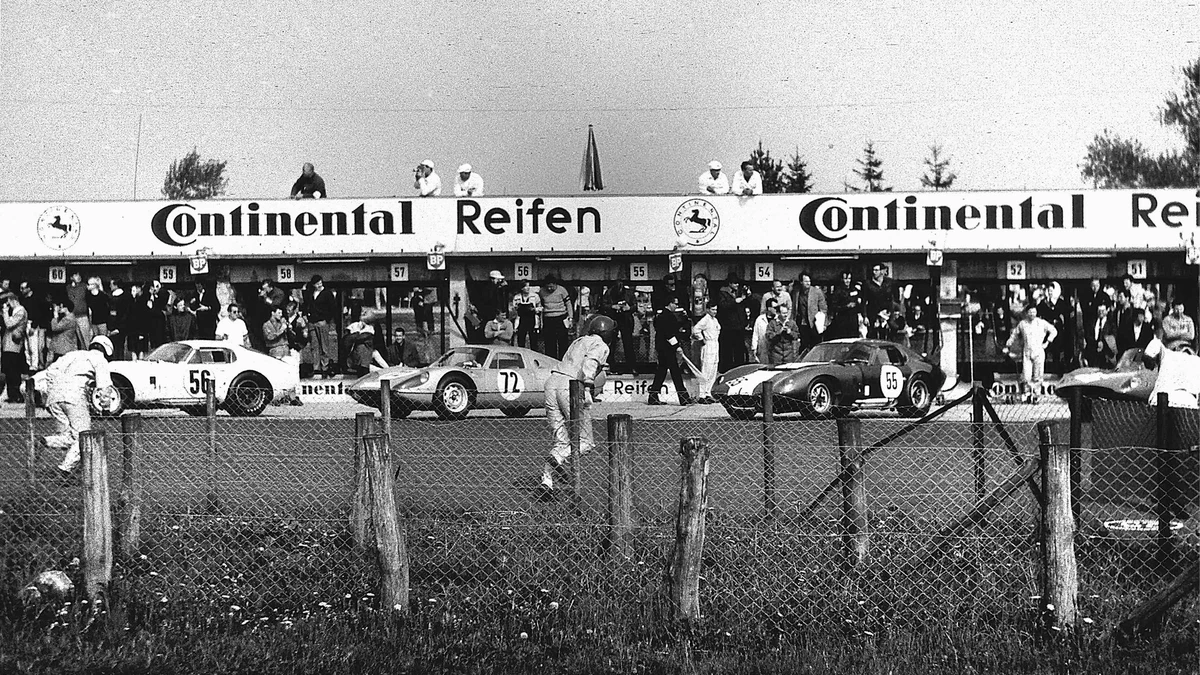
When the 24 Hours of Le Mans debuted in 1923, race organizers sought to promote automotive innovation rather than pure circuit racing. In 1925, the ACO devised a theatrical starting procedure where cars were angled diagonally along the pit straight in order of engine capacity.
The procedure required drivers to execute several sequential steps under pressure:
- The foot race: Sprinting thirty yards across the asphalt track upon the dropping of the starter flag.
- Cockpit entry: Hopping over high cockpit sills without the aid of exterior steps.
- Mechanical startup: Engaging ignition magneto switches and starter buttons manually.
- Traffic merge: Accelerating from diagonal pit boxes into a congested single-file racing line.
Drivers stood opposite the track along the pit grandstand wall. At precisely four o’clock in the afternoon, the race director dropped the French Tricolour flag. Drivers dashed across the asphalt, jumped into open cockpits, engaged mechanical starters, and merged into a chaotic scramble toward the Dunlop Curve.
The procedure rewarded physical agility, quick-firing electrical systems, and efficient cockpit ergonomics, quickly becoming the visual signature of endurance road racing across Europe.
On the record: Historical bulletins from the Automobile Club de l’Ouest confirm that the requirement for drivers to erect folding canvas weather hoods before driving away was repealed after the 1928 event.
How Did the Sprint Format Influence Race Car Cockpit Design?
The sprint format influenced race car cockpit design by forcing manufacturers to optimize ignition switches, door latches, and seat mountings for instantaneous entry. Most famously, Porsche positioned the ignition cylinder to the left of the steering column to minimize starting time.
In standard road cars, drivers used their right hand for both turning the key and selecting first gear. By relocating the ignition switch to the left dashboard, a driver could operate the starter with the left hand while simultaneously pulling the gear lever into first gear with the right hand and engaging the clutch with the left foot.
This ergonomic advantage saved two to three valuable seconds during the getaway. Other constructors designed lightweight fabric pull straps on exterior door handles and wide cockpit sills to allow drivers to slide behind the steering wheel effortlessly while still in motion.
For additional reading on how early endurance sports cars developed, explore our guide on the famous blue and orange gulf livery or review track signaling rules in racing flags meaning.
Why Did the Sprint Start Become a Severe Safety Hazard?
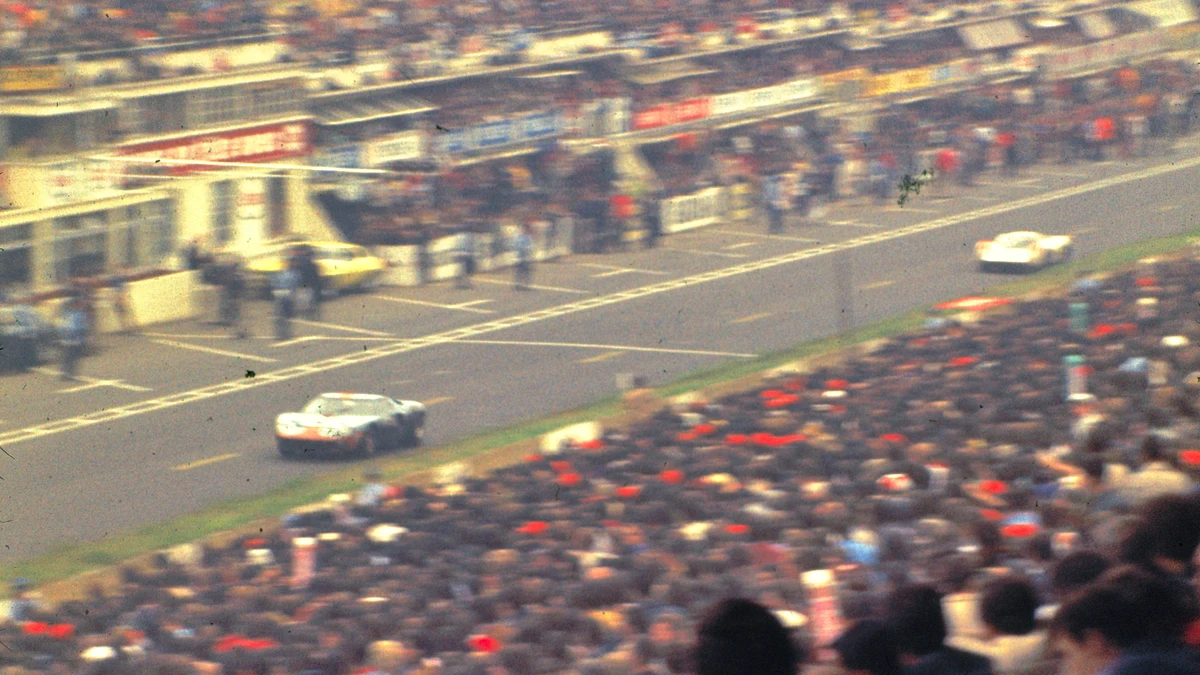
The sprint start became a severe safety hazard during the 1960s as closed prototype speeds approached two hundred and twenty miles per hour. Drivers prioritized immediate track position over personal safety, routinely choosing not to buckle multi-point seat harnesses before driving off.
When multi-point safety harnesses became standard equipment in the mid-1960s, securing the shoulder and lap belts required thirty to forty seconds with team assistance. A driver who took time to buckle up found themselves swamped by thirty competitors accelerating away unbelted.
Consequently, drivers steered with one hand while struggling to fasten complex metal buckles with the other at high speeds along the narrow Mulsanne straight. In 1968, Belgian driver Willy Mairesse suffered career-ending injuries on the opening lap when an improperly latched door tore open on his Ford GT40 at over one hundred and fifty miles per hour, throwing him from the vehicle.
The escalating danger forced competitors and governing bodies to confront the reality that traditions could not compromise driver survival.
How Did Jacky Ickx Protest and Win the 1969 Race?
Jacky Ickx protested the traditional sprint by walking deliberately across the track at the 1969 Le Mans start, entering his Ford GT40 calmly, and fastening his safety harness completely. Despite starting dead last, Ickx and co-driver Jackie Oliver drove through the field to win the race.
When the starter flag fell at 2:00 PM on June 14, 1969, the field sprinted madly across the pit straight. Twenty-four-year-old Jacky Ickx remained standing on the opposite side before strolling leisurely to his blue and orange J.W. Automotive GT40.
Ickx took full time to adjust his mirrors and secure his multi-point harness before starting the Ford V8 engine. By the time Ickx exited onto the circuit, the entire field was already out of sight heading through Tertre Rouge.
Tragically, Ickx safety protest was validated minutes later. On the opening lap, British privateer John Woolfe crashed heavily at Maison Blanche in his Porsche 917 while driving unbelted and was thrown from the wreckage, suffering fatal injuries. After twenty-four hours of fierce competition, Ickx won the race by a mere one hundred and twenty meters over Hans Herrmann Porsche 908, proving that careful safety preparation did not preclude victory.
| Historical Era | Start Methodology | Harness Protocol | Driver Starting Position | Governing Motivation |
|---|---|---|---|---|
| 1925 to 1969 | Traditional Running Sprint | Optional / Often unfastened on lap one | Standing on opposite side of pit straight | Public spectacle and touring roadworthiness |
| 1970 | In-Car Stationary Grid Start | Mandatory fully fastened before start | Seated in cockpit with engine switched off | Transitional safety reform post-1969 protest |
| 1971 to Present | Rolling Formation Start (Two-by-Two) | Fully secured behind official pace car | Moving formation at regulated pace speed | Standardized international endurance protocol |
Source: Historical race regulations of the Automobile Club de l’Ouest and Federation Internationale de l’Automobile archives.
How Did the Race Transition to the Modern Rolling Start?
The race transitioned to the modern rolling start through a stepped regulatory overhaul. In 1970, the ACO required drivers to be seated in cockpits with harnesses fastened before the flag dropped, before permanently adopting the rolling start in 1971.
For the 1970 edition, cars remained angled along the pit straight, but drivers sat strapped in with engines off. When the flag dropped, drivers turned their keys and accelerated from a stationary position. While safer, the staggered arrangement still created bottlenecks when high-horsepower prototypes merged abruptly into the narrow track neck.
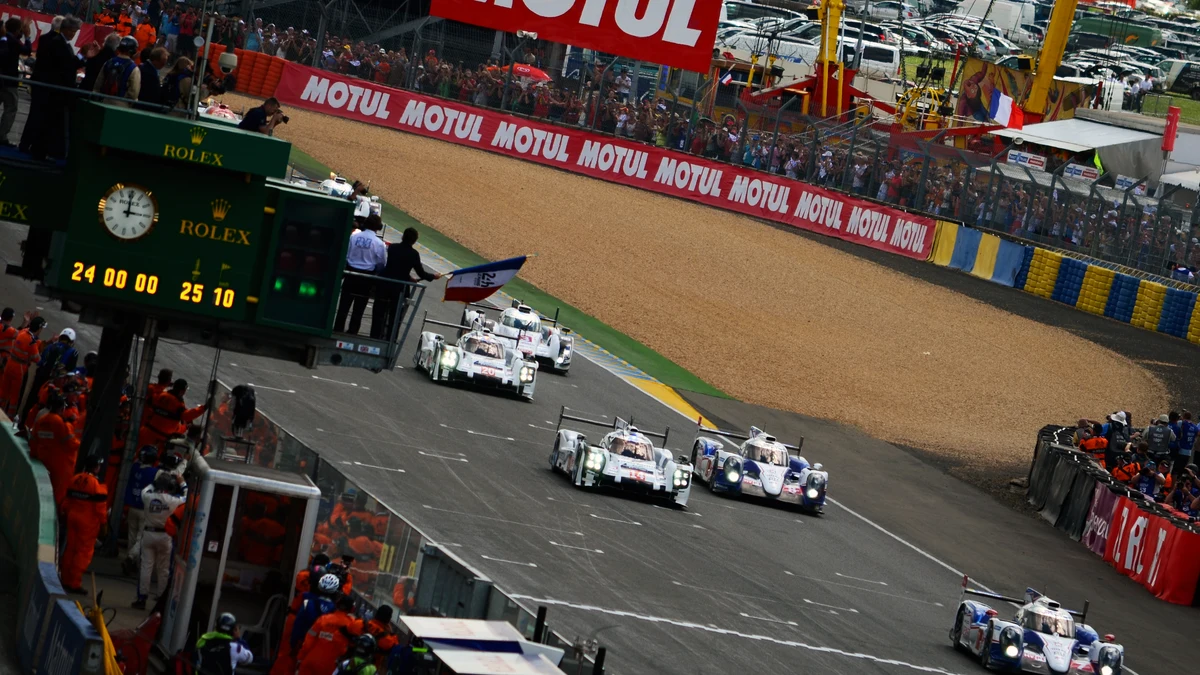
Recognizing the effectiveness of the pace-car system used in American motorsport, the ACO adopted the two-by-two rolling start for the 1971 race. Under this format, the entire field completes a paced formation lap behind the official leading vehicle, ensuring that cars cross the timing line at a controlled, uniform velocity with all safety equipment verified.
To explore more historical regulations and competition machinery, visit our overview of f1 car evolution or browse the complete Races and Rules category.
How we researched this: This historical guide was compiled from official Automobile Club de l’Ouest archive records, contemporary race reporting in Motor Sport Magazine, and published memoirs of Jacky Ickx.
From the archive mailbag
When was the traditional Le Mans running start banned?
The traditional running sprint start was abolished following the 1969 event, replaced by a seated stationary start in 1970 and the permanent adoption of the rolling start in 1971.
Why does Porsche place the ignition key on the left side of the dashboard?
Porsche placed the ignition key to the left of the steering wheel to allow drivers during the running start to start the engine with the left hand while simultaneously shifting into gear with the right hand.
Did Jacky Ickx really walk to his car at Le Mans in 1969?
Yes. Jacky Ickx walked slowly across the track in protest against the dangerous sprint start, fastened his safety harness fully, started in last position, and went on to win the 24-hour endurance race.
Why did drivers not wear seat belts during the sprint start era?
Securing multi-point safety harnesses took thirty to forty seconds, so drivers chose to pull away unbelted to avoid losing track position, attempting to fasten belts while traveling at high speeds on subsequent laps.
What starting procedure does the 24 Hours of Le Mans use today?
Today, the 24 Hours of Le Mans uses an official rolling start, where the field completes a formation lap behind a safety pace car before accelerating in two-by-two grid alignment when the green light illuminates.