The record in brief The gulf livery is an iconic motorsport color scheme consisting of powder blue and marigold orange, popularized in international endurance racing by John Wyer Automotive Engineering through dominant Le Mans victories with the Ford GT40 and Porsche 917 between 1968 and 1971.
The transition from traditional national racing colors to commercial sponsor liveries in 1968 gave birth to some of the most enduring visual identities in automotive history. Among these schemes, the distinctive gulf livery established an aesthetic standard that bridged international sportscar racing, cinema, and modern design culture.
- Color palette formulation: The scheme originated when Grady Davis acquired Wilshire Oil, combining soft powder blue with bold marigold orange separated by thin black coachlines.
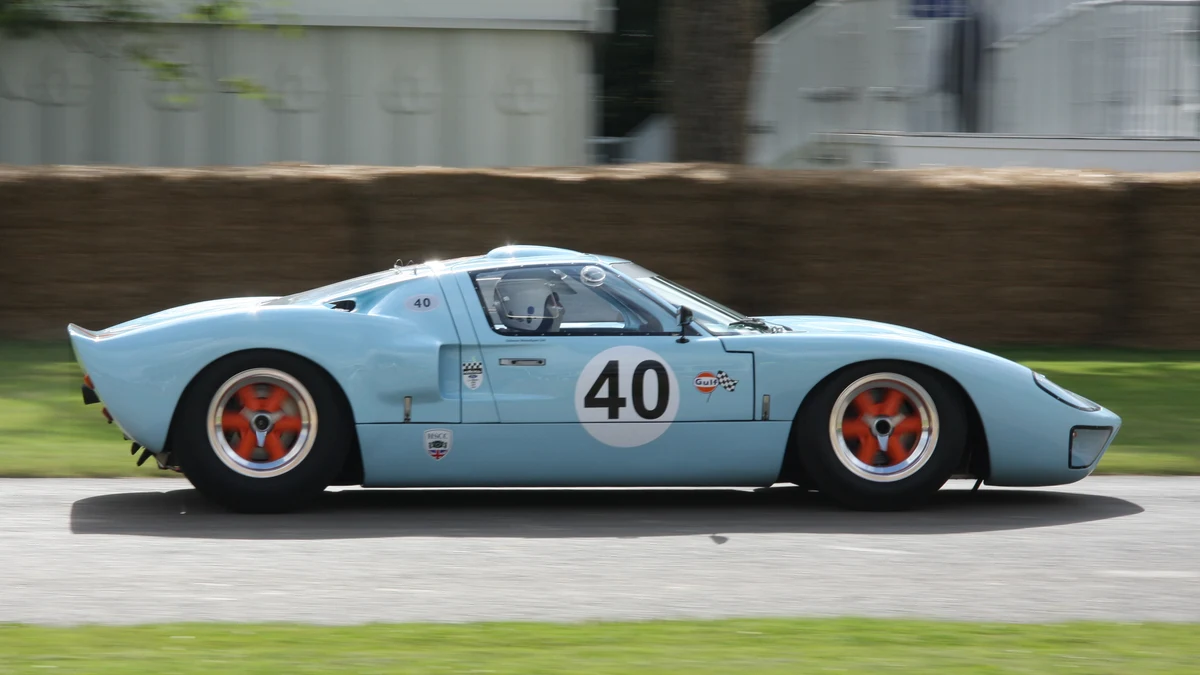
- Le Mans dominance: Chassis 1075 of the Ford GT40 achieved historic back-to-back victories at the 24 Hours of Le Mans in 1968 and 1969 wearing the blue and orange colors.
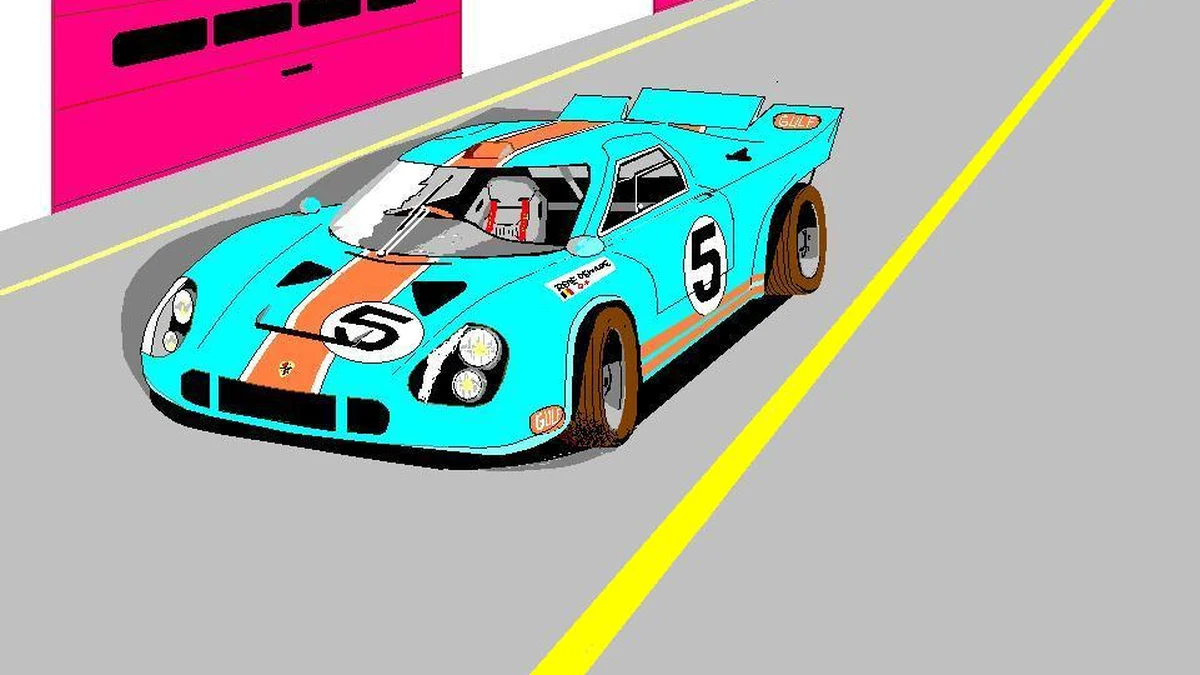
- The Porsche 917 chapter: John Wyer Automotive Engineering campaigned the Porsche 917 Kurzheck in 1970 and 1971, dominating the World Sportscar Championship.
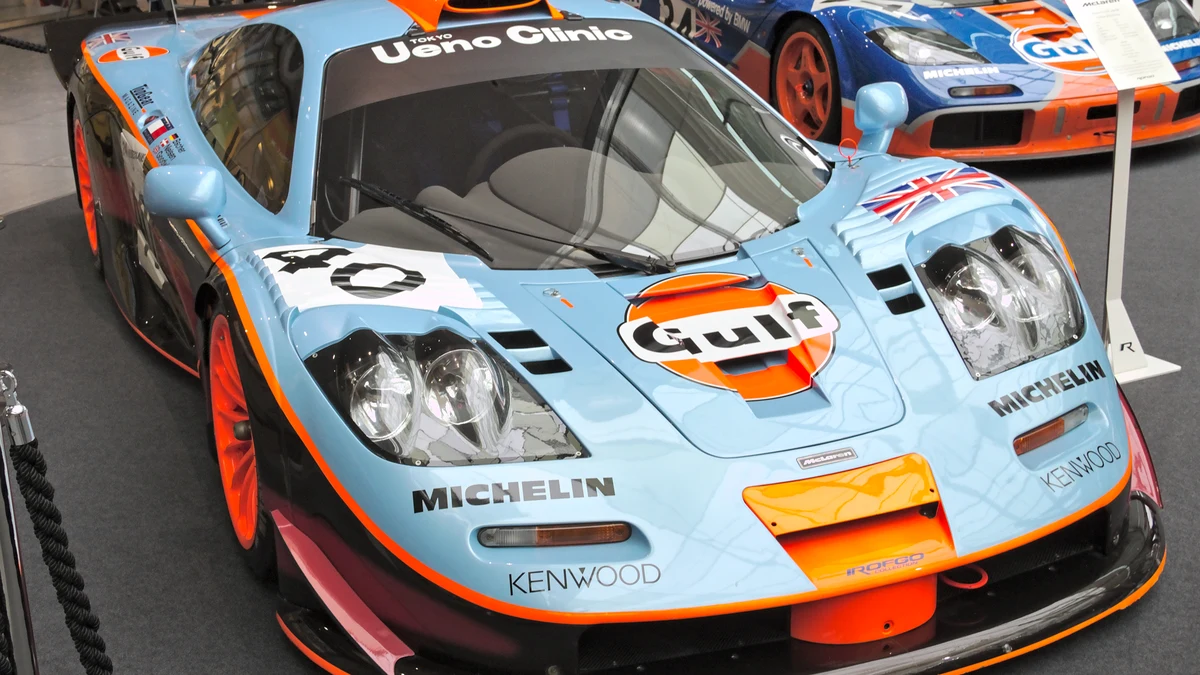
- Modern revivals: The color scheme has returned across multiple eras, adorning the McLaren F1 GTR in 1995, Aston Martin Vantage GT cars, and special Formula One heritage appearances.
Where Did the Gulf Livery Colors Originate?
The gulf livery colors originated in 1967 through a partnership between Gulf Oil executive Grady Davis and racing team manager John Wyer. When Gulf acquired Wilshire Oil Company, Davis adopted the soft powder blue and bright marigold orange branding for his competition entries.
Before 1967, corporate participation in motorsport was largely restricted to small decal badges. When Grady Davis entered his personal Ford GT40 in the 1967 Daytona 24 Hours, the machine carried dark corporate navy blue paint with orange stripes.
Designers established distinct visual guidelines for the racing livery:
- Base body color: A bespoke pale powder blue covering the upper fenders, roof, and side quarter panels.
- Center accent stripe: A wide marigold orange center stripe flowing from the front nose intake over the roof to the rear tail.
- Separation lines: Fine black pinstripe borders separating the orange and blue painted surfaces.
- Roundel backgrounds: Crisp white circular number plates with black serif numerals positioned on the hood and doors.
When Davis partnered with John Wyer to establish J.W. Automotive Engineering for the 1968 International Championship for Makes, graphic designers refined the palette. Designers selected a lighter, non-standard powder blue base contrasted against a wide marigold orange center stripe bordered by crisp black pinstripes. This lighter tone stood out sharply on color television broadcasts and printed magazine film stock of the era.
On the record: Historical records from the Automobile Club de l’Ouest confirm that the 1968 24 Hours of Le Mans marked the first major endurance victory for a fully sponsored commercial livery on a prototype sportscar.
How Did the Ford GT40 Establish the Colors at Le Mans?
The Ford GT40 established the colors at Le Mans by securing consecutive overall victories in 1968 and 1969 with chassis number 1075. Pedro Rodriguez and Lucien Bianchi won in 1968, followed by Jacky Ickx and Jackie Oliver in 1969 after a dramatic final-lap duel.
Chassis 1075, a lightweight Mirage-derived GT40 Mk I powered by a 4.9-liter Ford V8, remains one of the most celebrated chassis in motorsport history. In 1968, facing fierce competition from factory Porsche 908 prototypes, Rodriguez and Bianchi drove a measured, disciplined race to take victory on the Circuit de la Sarthe.
In 1969, chassis 1075 returned to Le Mans under John Wyer management. In one of the closest finishes in 24-hour endurance history, Jacky Ickx crossed the finish line a mere 120 meters ahead of the pursuing Porsche 908 of Hans Herrmann, proving the durability of the British-prepared machine.
For more historical background on how early motorsport liveries evolved from national colors, readers can review our guides on british racing green and the broader definitions explored in what is a livery in racing.
What Made the Porsche 917 Campaign So Successful?
The Porsche 917 campaign succeeded because John Wyer team resolved the aerodynamic instability of the car and paired the 5.0-liter flat-12 engine with exceptional operational pit discipline. The team won seven of ten rounds in 1970 and five rounds in 1971 to capture consecutive World Championships for Makes.
When Porsche originally launched the 917 in 1969, the car suffered from catastrophic rear aerodynamic lift that made high-speed handling dangerous. Porsche contracted J.W. Automotive Engineering as its official factory racing partner for the 1970 season.
During winter testing at the Osterreichring, Wyer chief engineer John Horsman observed dead gnats accumulating only on the front nose, indicating separated airflow over the tail. Horsman fabricated a modified wedge tail from aluminium sheets, creating the 917K (Kurzheck). The resulting downforce transformed the machine into an unstoppable championship winner.
Piloted by drivers including Pedro Rodriguez, Jo Siffert, and Brian Redman, the blue and orange 917Ks dominated circuits worldwide, including Daytona, Brands Hatch, Monza, and Spa-Francorchamps.
How Has the Color Scheme Evolved in Modern GT and Prototype Racing?
The color scheme evolved in modern GT and prototype racing by adapting to contemporary carbon fibre composite bodywork across multiple manufacturers. GTC Motorsport campaigned the McLaren F1 GTR in 1995, followed by Aston Martin Racing in the 2000s and recent special Formula One livery appearances.
In the mid-1990s, Ray Bellm partnered with Gulf to enter the legendary McLaren F1 GTR in the BPR Global GT Series and Le Mans, claiming multiple race wins and podium finishes. The bold blue and orange graphics translated seamlessly onto modern supercar profiles.
Between 2008 and 2011, Aston Martin Racing adopted the colors for their factory DBR9 GT1 and Lola-Aston Martin LMP1 prototype programs, securing GT1 class victories at Le Mans. The timeless palette continues to reappear in modern motorsport as an enduring symbol of racing heritage.
| Era | Vehicle Model | Entrant Organization | Key Racing Accomplishment | Graphic Composition |
|---|---|---|---|---|
| 1968 to 1969 | Ford GT40 Mk I (Chassis 1075) | J.W. Automotive Engineering | 1968 and 1969 Le Mans 24 Hours Winner | Powder blue body, orange center band and nose |
| 1970 to 1971 | Porsche 917K | J.W. Automotive Engineering | 1970 and 1971 World Sportscar Champion | Powder blue with center orange stripe and roof |
| 1972 to 1975 | Mirage M6 / GR7 / GR8 | Gulf Research Racing | 1975 Le Mans 24 Hours Winner (GR8) | Light blue with broad orange side panels |
| 1995 to 1997 | McLaren F1 GTR / Longtail | GTC Motorsport / Davidoff | 1996 BPR GT Champion, 1997 Le Mans 2nd Overall | Metallic blue base with dark orange accents |
| 2008 to 2011 | Aston Martin DBR9 / LMP1 | Aston Martin Racing | 2008 Le Mans GT1 Class Winner | Baby blue with bold orange front grille surround |
Source: Automobile Club de l’Ouest and World Sportscar Championship race archives.
Why Do Vintage Racing Aesthetics Endure in Modern Fashion?
Vintage racing aesthetics endure in modern fashion because the color palettes represent an era of pure mechanical competition and human daring. Enthusiasts appreciate the understated elegance of classic automotive liveries compared to cluttered modern digital graphics.
The distinctive combination of pale blue and bold orange remains a favorite among motorsport enthusiasts worldwide. Spectators looking to incorporate classic endurance racing styling into daily attire can select a polo in those colors featuring heritage racing collar cuts.
For additional reading on classic competition history, explore our technical breakdown of f1 car evolution, flag protocols in racing flags meaning, or browse the entire Liveries and Colors collection.
How we researched this: This historical retrospective was compiled using official Automobile Club de l’Ouest race results, Porsche factory heritage documentation, and John Wyer published technical memoirs.
From the archive mailbag
Which cars won the 24 Hours of Le Mans in the blue and orange colors?
The Ford GT40 chassis 1075 won the 24 Hours of Le Mans in both 1968 and 1969, and the Mirage GR8 Ford-Cosworth won the event in 1975, all competing in the distinctive blue and orange color scheme.
Why did the Gulf team choose powder blue instead of dark navy?
Graphic designers selected powder blue because Gulf had acquired Wilshire Oil Company, which used pale blue. The lighter tone provided higher visual contrast on 1960s color television broadcasts and printed photography.
Did the Porsche 917 ever win Le Mans in the Gulf color scheme?
While the J.W. Automotive Porsche 917K won numerous endurance rounds including Daytona and Spa, its best finish at Le Mans was second place overall in 1971. The 1970 Le Mans race was won by the red-and-white Porsche Salzburg 917K, and 1971 by the white Martini 917K.
Who was John Wyer in motorsport history?
John Wyer was a legendary British racing team manager who directed Aston Martin to Le Mans victory in 1959 before managing the dominant Ford GT40 and Porsche 917 endurance programs of the late 1960s and early 1970s.
What is chassis number 1075?
Chassis 1075 is the specific Ford GT40 Mk I prepared by J.W. Automotive that achieved back-to-back overall victories at the 24 Hours of Le Mans in 1968 and 1969, making it one of the most valuable racing chassis in the world.