The record in brief The plymouth superbird was a specialized aerodynamic stock car developed by Chrysler Corporation for the 1970 NASCAR season. Built with an extended aerodynamic nose cone and a towering rear wing, the Superbird dominated high-speed superspeedways before regulatory engine restrictions curtailed the winged car era.
The late 1960s witnessed an intense technological arms race across American stock car racing, known historically as the NASCAR Aero Wars. To overcome the aerodynamic limitations of bluff production bodies at speeds approaching two hundred miles per hour, Chrysler engineers created the plymouth superbird, pushing the boundaries of factory motorsport engineering.
- Aerodynamic innovation: Developed using wind tunnel facilities at Wichita State University, the Superbird achieved a drag coefficient of 0.28.
- Richard Petty return: The creation of the Superbird successfully lured star driver Richard Petty back to Plymouth after his 1969 season campaigning Fords.
- Strict homologation rules: NASCAR mandated that manufacturers build at least two cars per dealer franchise, resulting in 1,935 street-legal Superbirds produced for the 1970 model year.
- Rulebook restriction: Following 1970 dominance, NASCAR president Bill France restricted winged cars to a maximum engine displacement of 305 cubic inches, effectively ending their competitive viability.
Why Did Chrysler Develop the Plymouth Superbird for NASCAR?
Chrysler developed the plymouth superbird to regain aerodynamic dominance on high-speed superspeedways and convince champion driver Richard Petty to return to the Plymouth racing fold. Standard production road cars produced dangerous rear lift at speeds exceeding one hundred and eighty miles per hour.
During the 1968 and 1969 seasons, Ford Motor Company dominated NASCAR superspeedways with the aerodynamic Ford Torino Talladega and Mercury Cyclone Spoiler II. Richard Petty requested that Plymouth build an equivalent aerodynamic body. When Plymouth executives initially declined, Petty defected to Ford for the 1969 championship season.
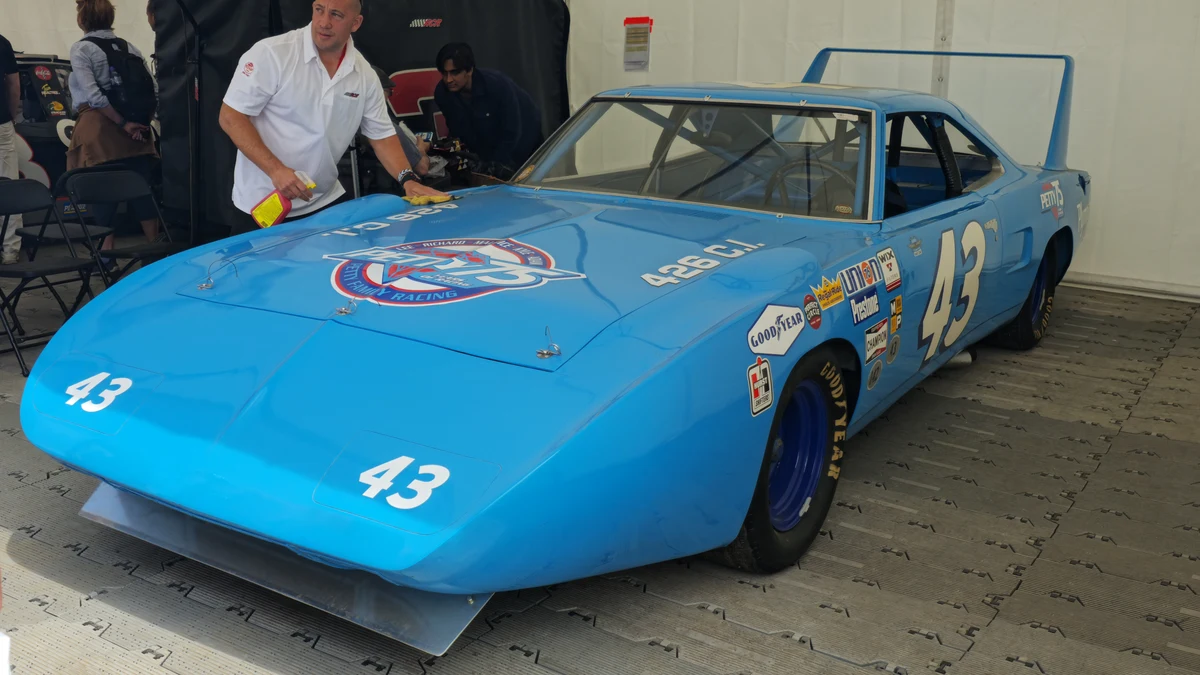
To win back their marquee driver and counter Dodge successful Charger Daytona program, Plymouth greenlit Project Superbird. Chrysler missile division aerodynamicists John Pointer and Bob Marcell led the engineering effort, utilizing wind tunnels to design an extended nose cone, front fender air extraction extractors, and an elevated rear stabilizer.
The aerodynamic modifications transformed high-speed vehicle stability. Airflow pressed the front tires firmly onto the banked surface, while the high rear wing countered rear lift without stalling airflow across the trunk lid.
On the record: Historical archives of the National Association for Stock Car Auto Racing confirm that Richard Petty won eight major races in 1970 driving the number forty-three Petty Blue Superbird.
How Did the Superbird Compare to the Dodge Charger Daytona?
The Superbird differed from the Dodge Charger Daytona through redesigned front nose bodywork, altered rear wing angles, and modified rear window transitions. Because the base Plymouth Road Runner possessed different body lines than the Dodge Charger, engineers had to redevelop the aerodynamic components.
While the Dodge Charger Daytona used a flush flush-mounted steel rear window plug, Plymouth Road Runner architecture made a flush window conversion costly. Engineers retained the standard Road Runner recessed rear window, compensating for minor airflow separation by increasing the angle and surface area of the tall rear wing struts.
The aerodynamic components featured subtle engineering refinements:
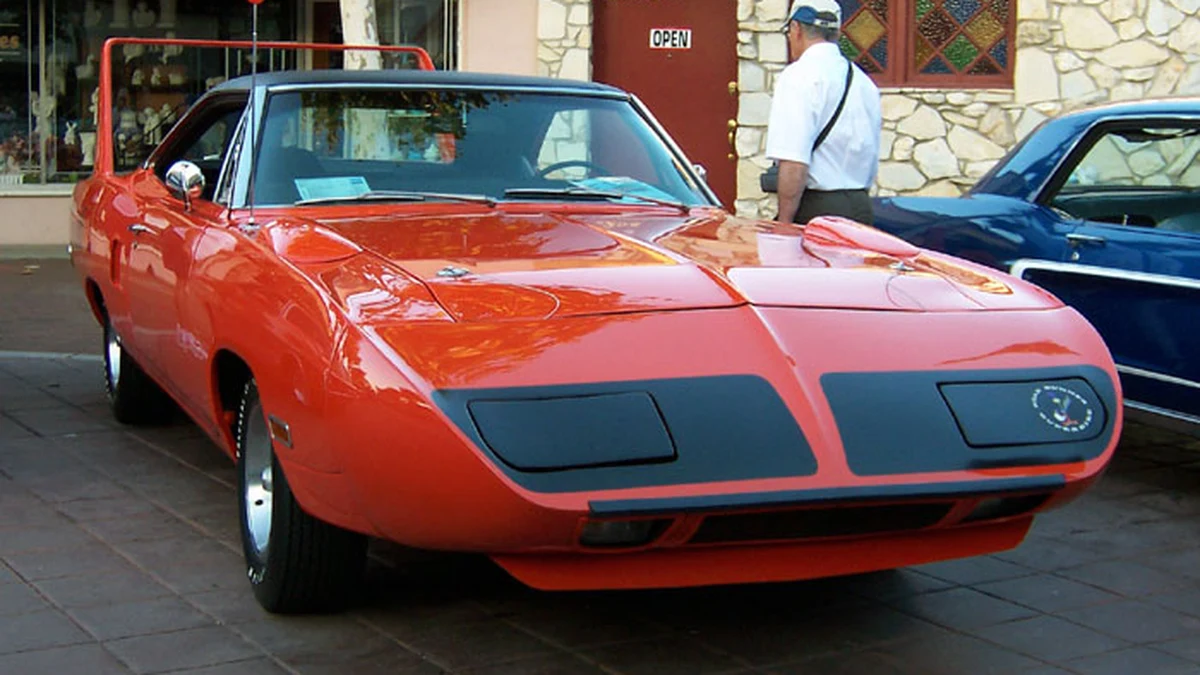
- Nose cone material: The Superbird utilized lightweight fiberglass construction with a higher twenty-degree upward rake compared to the steel nose of the Daytona.
- Front fender vents: Cutout openings atop the front fenders provided wheel clearance during suspension compression and relieved high-pressure air trapped in the wheel wells.
- Vertical wing uprights: The rear wing vertical uprights swept backward more aggressively, angling inward toward the vehicle center line.
- Powertrain options: Street versions offered the 440 Super Commando, 440 Six-Barrel, or the competition-derived 426 Hemi.
What Were the Strict 1970 NASCAR Homologation Requirements?
The 1970 NASCAR homologation requirements mandated that manufacturers produce one car per two dealership franchises or a flat minimum of five hundred units, whichever was greater. For Plymouth extensive dealer network, this rule required the manufacture of at least 1,920 street-legal production cars.
In 1969, Dodge had easily satisfied the previous homologation requirement by assembling five hundred and three Charger Daytonas. Recognizing that specialized aerodynamic bodies were moving stock car racing away from standard showroom models, NASCAR president Bill France raised the production threshold dramatically for the 1970 season.
Plymouth mobilized its Lynch Road assembly plant in Detroit to meet the mandate, ultimately completing 1,935 Superbirds. Street models featured complete Road Runner interior appointments, functional vacuum-operated flip-up headlights, and distinctive Road Runner cartoon graphics on the wing uprights.
For more technical context on how aerodynamic regulation shaped competition across different eras, explore our analysis of f1 car evolution or review track signaling history in racing flags meaning.
What Was the On-Track Competition Record of the Winged Cars?
The on-track competition record of the winged cars was commanding, with Plymouth Superbirds and Dodge Daytonas winning twenty-one of thirty-eight premier NASCAR races during the 1970 Grand National season. Drivers set numerous closed-course speed records across Daytona, Talladega, and Darlington.
On March 24, 1970, Buddy Baker made international motorsport history by piloting a Chrysler engineering Dodge Charger Daytona to a certified speed of 200.447 miles per hour at Talladega Superspeedway. This run marked the first official time a stock car surpassed the two hundred mile per hour barrier on a closed circuit.
Piloted by Pete Hamilton, the number forty Superbird fielded by Petty Enterprises claimed prestigious victories at the 1970 Daytona 500 and both Talladega 500 events. Combined with Richard Petty eight victories, Plymouth established an overwhelming record on high-speed ovals.
| Specification | 1969 Dodge Charger Daytona | 1970 Plymouth Superbird |
|---|---|---|
| Base Body Platform | Dodge Charger B-body | Plymouth Road Runner B-body |
| Nose Extension Length | 18.0 inches (Steel) | 19.0 inches (Fiberglass) |
| Rear Stabilizer Height | 23.0 inches | 24.5 inches |
| Drag Coefficient (Cd) | 0.28 (Wind tunnel tested) | 0.28 (Wind tunnel tested) |
| Homologation Total Built | 503 production units | 1,935 production units |
| Top Engine Option | 426 Race Hemi (425 hp nominal) | 426 Race Hemi (425 hp nominal) |
| 1970 Superspeedway Wins | 13 Grand National victories | 8 Grand National victories (Petty Team) |
Source: Chrysler Engineering historical archives and NASCAR Grand National official record books.
Why Did NASCAR Restrict Winged Aero Warriors After 1970?
NASCAR restricted winged aero warriors after 1970 because soaring speeds threatened track safety and tire durability. Sanctioning officials feared that passenger tire technology could not withstand sustained loads above two hundred miles per hour on abrasive asphalt banks.
Ahead of the 1971 Grand National season, NASCAR implemented an engine displacement rule for specialized aerodynamic bodywork. Cars featuring aerodynamic nose cones or high rear wings were limited to a maximum engine displacement of 305 cubic inches (5.0 liters), while conventional passenger car bodies were permitted to run full 429 and 426 cubic inch engines.
Because the small 305 cubic inch engines could not produce sufficient horsepower to remain competitive against big-block rivals, teams retired the winged cars immediately. The Superbird competed for only one glorious season, securing an enduring place in American motorsport history.
To examine other historic racing designs and color schemes, explore our guides on what is a livery in racing, British motorsport traditions in british racing green, or the complete Stock Car History archive.
How we researched this: This technical comparison was compiled using original Chrysler engineering wind tunnel reports, period NASCAR official bulletins from 1969 to 1971, and historical documentation preserved by the Petty Enterprises historical museum.
From the archive mailbag
Why was the rear wing on the Plymouth Superbird so high?
The rear wing was elevated twenty-four inches above the body to place the horizontal aerofoil in clean, undisturbed airflow above the roofline, and to allow the rear trunk lid to open fully on street models.
How many street-legal Plymouth Superbirds were built?
Plymouth produced 1,935 street-legal Superbirds for the 1970 model year to satisfy NASCAR revised homologation mandate of two cars per dealer franchise.
Did Richard Petty win the Daytona 500 in a Plymouth Superbird?
No. While Richard Petty won eight races in a Superbird in 1970, teammate Pete Hamilton won the 1970 Daytona 500 driving the number forty Petty Enterprises Superbird.
What was the top speed of the Plymouth Superbird in race trim?
In NASCAR superspeedway competition trim with a 426 Hemi engine, the Plymouth Superbird reached speeds exceeding two hundred miles per hour, lap-averaging over 195 mph at Talladega.
Why did NASCAR ban the Superbird after the 1970 season?
NASCAR did not ban the body outright but restricted winged cars to a small 305 cubic inch engine limit for 1971, making them uncompetitive against standard cars running 426 and 429 cubic inch engines.