The record in brief Rosso corsa (racing red) is the international national racing color assigned to Italian competition vehicles by the AIACR and FIA, made globally famous through decades of Grand Prix and endurance racing by Alfa Romeo, Maserati, Lancia, and Scuderia Ferrari.
No color in motorsport history is more universally recognized than Italian racing red. Long before commercial corporate sponsorships dominated racing car liveries, national colors identified competitors by their country of origin on circuits across the world. Exploring the history of rosso corsa reveals how an epic 1907 cross-continental raid established the color, how shades evolved across different manufacturers, and why it remains the defining visual identity of Italian performance.
- Origins in early trials: Italian racing red was established after Prince Scipione Borghese won the grueling 1907 Peking to Paris motor race in a red Itala, prompting governing bodies to adopt red for Italy.
- Early manufacturer shades: Alfa Romeo and Maserati originally used dark amaranth and deep crimson tones before brighter scarlet formulations emerged.
- Enzo Ferrari devotion: Enzo Ferrari preserved the red racing color when establishing Scuderia Ferrari in 1929, making it mandatory for all factory Grand Prix and sports prototype entries.
- Television formulation shifts: In the late 1990s, Ferrari introduced lighter, fluorescent orange-red shades (Rosso Scuderia) to ensure cars appeared true red on cathode-ray tube television screens.
Where Did the Rosso Corsa National Color Originate?
The rosso corsa national color originated during the 1907 Peking to Paris trial, when Italian nobleman Prince Scipione Borghese drove a bright red Itala to a historic victory across nine thousand miles of rugged Asian and European terrain.
In the earliest Gordon Bennett Cup competitions between 1900 and 1906, red had originally been assigned to American entries. However, following Borghese triumphant reception in Paris, the Association Internationale des Automobile Clubs Reconnus (AIACR) formally codified red as the official international racing livery color for Italian entrants in 1908.
Italian constructors including FIAT, Alfa Romeo, Maserati, and Bugatti (early Italian-born entries) embraced the color scheme. Italian competition machines carried red bodywork with white racing number roundels across Grand Prix road courses throughout the pre-war era.
On the record: Historical records of the Federation Internationale de l’Automobile confirm that national color rules governed international Grand Prix grids until sponsor advertising was authorized for the 1968 season.
Why Are Ferraris Red and How Did the Tradition Persist?
Ferraris are red because Enzo Ferrari began his career running Alfa Romeo racing cars that were required by international regulations to carry Italy national red color. When Ferrari established his own manufacturing company in 1947, he retained the color out of national loyalty and sporting tradition.
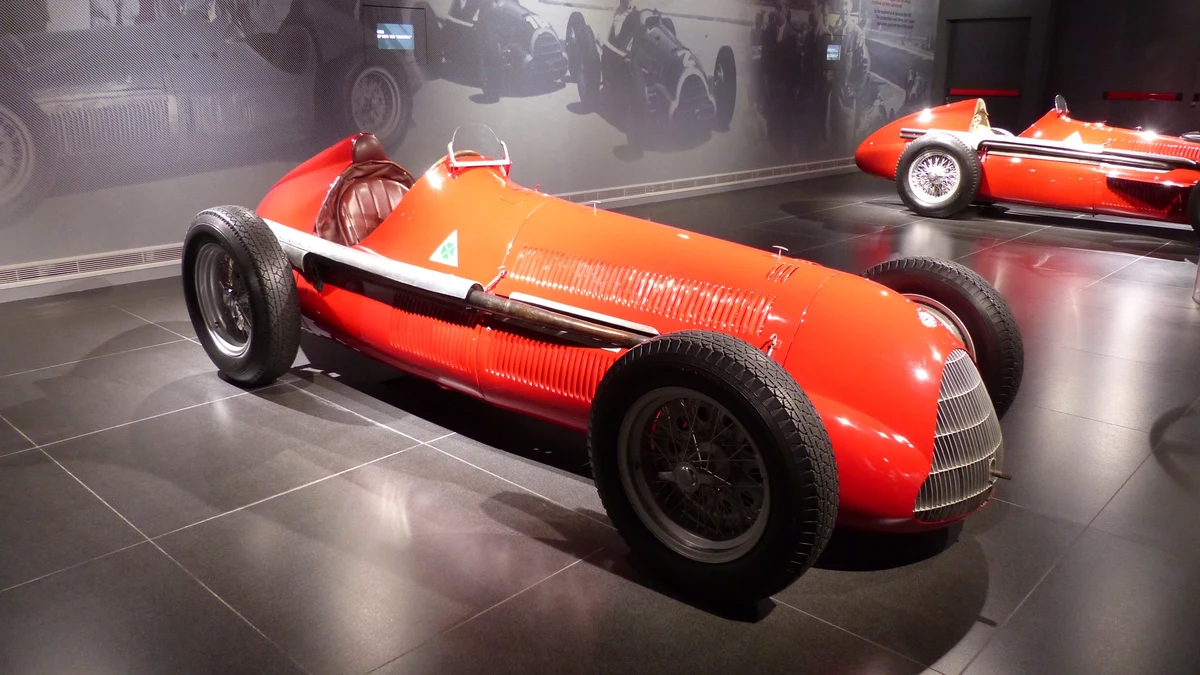
During the 1920s and 1930s, Enzo Ferrari managed the factory racing arm of Alfa Romeo under the Scuderia Ferrari banner. The dark red Alfa Romeo P2, P3, and Tipo B Grand Prix cars established an unmatched record of competition success across European road circuits.
When the first official Ferrari-badged competition car, the 125 S, debuted at Piacenza in May 1947, it naturally carried the traditional Italian racing red. As Ferrari road cars evolved to finance the racing team, early customers demanded the same red paint seen on victorious Grand Prix and Le Mans sports racers, cementing red as the quintessential factory color.
For more detailed background on how national colors shaped early international competition, explore our comprehensive guide on british racing green or review the transition to commercial branding in what is a livery in racing.
How Did the Red Shade Change from Dark Crimson to Bright Scarlet?
The red shade changed from dark crimson to bright scarlet as paint chemistry evolved from natural oil-based enamels to modern synthetic acrylics and polyurethanes. Early Italian Grand Prix cars used a deep, dark amaranth red rather than modern bright shades.
During the 1920s and 1930s, Alfa Romeo and Maserati used a dark, wine-toned crimson (Rosso Alfa) that appeared almost maroon in low lighting conditions. This darker formulation resisted discoloration caused by hot engine oil spray and radiator steam.
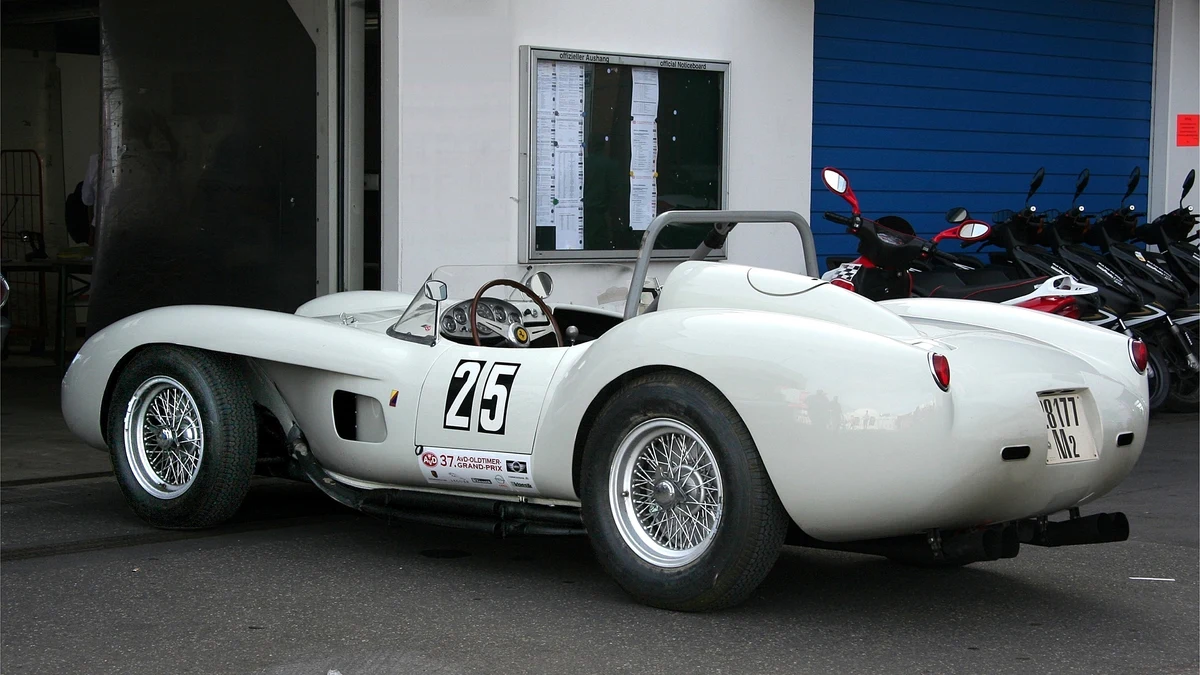
Following World War II, synthetic nitrocellulose lacquers allowed manufacturers to achieve brighter, more brilliant tones. During the 1950s and 1960s, Ferrari sports racers like the 250 Testa Rossa and Formula One cars like the 156 Sharknose adopted a brilliant, true scarlet red (Rosso Corsa Chiaro) that stood out dramatically on contemporary color film photography.
Different Italian manufacturers maintained subtle shade distinctions:
- Alfa Romeo: Historically favored a deeper, ruby-tinted crimson with cooler undertones.
- Maserati: Utilized a slightly darker amaranth shade, often paired with blue, yellow, or white nose bands.
- Lancia: Campaigned sports and rally prototypes in rich burgundy-tinted Rosso Amaranto before transitioning to sponsor schemes.
- Ferrari: Gradually lightened its red formulations across decades to maximize track visibility.
Why Did Ferrari Adopt Orange-Red Shades for Television?
Ferrari adopted orange-red shades in 1997 because standard crimson pigments appeared dark brown or muddy on global cathode-ray tube (CRT) television broadcasts. Formulating a lighter red with strong orange undertones ensured the car appeared brilliant true red on household television screens.
When commercial partner Marlboro became title sponsor of Scuderia Ferrari in 1997, color engineers analyzed how race broadcast cameras and PAL/NTSC signal processing affected color rendition.
The team introduced Rosso Scuderia (often referred to as fluorescent or Marlboro red) on the Ferrari F310B and subsequent championship-winning machines driven by Michael Schumacher. Under direct sunlight on European race tracks, the cars exhibited a distinct orange hue in person, but broadcast cameras rendered the color as a rich, glowing scarlet.
With the transition to high-definition digital broadcasting and LED displays in the late 2000s, Ferrari returned to deeper metallic and satin formulations, culminating in historical heritage shades like Rosso 70 Anni and matte Rosso Corsa.
| Historical Era | Representative Car | Visual Tone / Paint Code | Chemical / Technical Basis | Primary Context |
|---|---|---|---|---|
| 1907 to 1939 | Alfa Romeo P2 / Tipo B | Dark Crimson / Amaranth | Natural oil-based enamel | AIACR international national color mandate |
| 1947 to 1967 | Ferrari 125 S / 250 TR | Classic Rosso Corsa (Glidden/Salchi) | Nitrocellulose synthetic lacquer | Post-war Grand Prix and Le Mans dominance |
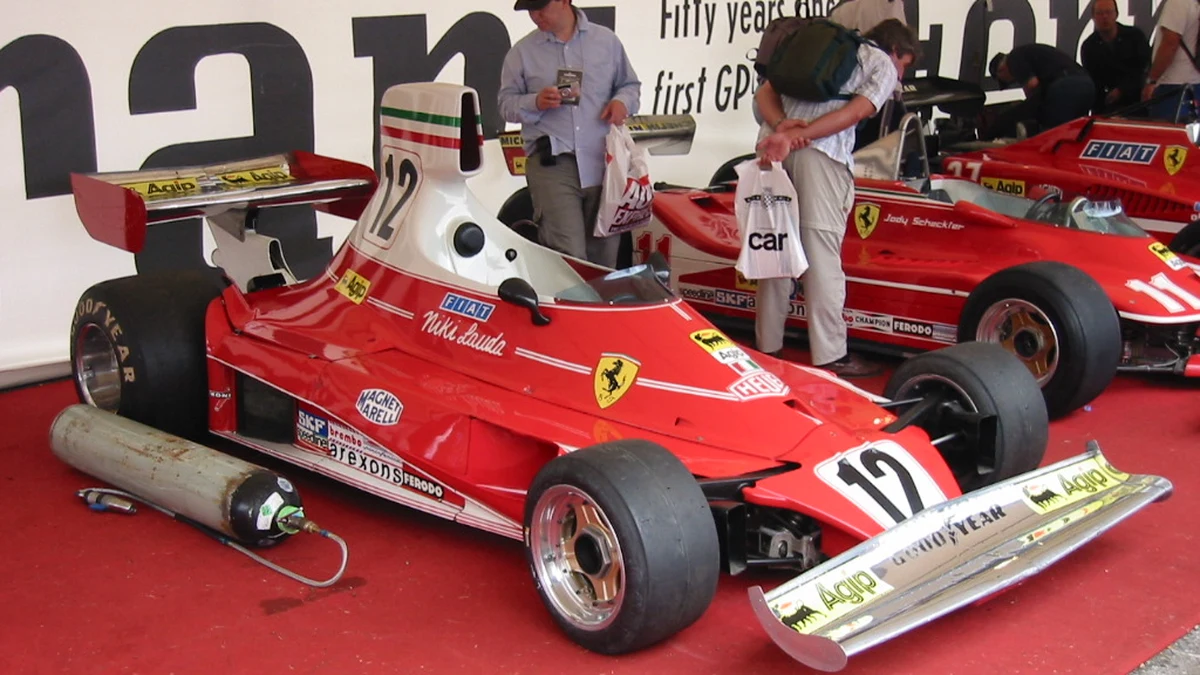
| 1968 to 1996 | Ferrari 312T / 412 T2 | Rosso Corsa 300 / Glasurit | Two-stage polyurethane | Preserved red identity during commercial sponsorship |
| 1997 to 2006 | Ferrari F310B / F2004 | Rosso Scuderia 323 (Fluorescent) | High-visibility orange-tinted formulation | CRT broadcast color compensation |
| 2007 to Present | Ferrari F2007 / SF-24 | Metallic / Matte Rosso Corsa | Low-weight matte polyurethane coatings | Modern high-definition digital television and weight reduction |
Source: Centro Storico Alfa Romeo, Ferrari Classiche archives, and historical paint formulation records.
How Is Italian Racing Red Preserved in Modern Competition?
Italian racing red is preserved in modern competition by remaining the mandatory primary identity of Scuderia Ferrari in Formula One and the World Endurance Championship. Even in an era dominated by corporate advertising, Ferrari retains red as its core visual signature.
In 2023, Ferrari returned to top-tier prototype sports car racing with the 499P hypercar, winning the centenary 24 Hours of Le Mans in a heritage red and yellow livery inspired by the 1973 Ferrari 312 PB.
To examine more historical Grand Prix regulations and track traditions, read our comprehensive overview of f1 car evolution, flag marshaling rules in racing flags meaning, or browse the complete Liveries and Colors collection.
How we researched this: This historical guide was compiled from official Ferrari Classiche documentation, Centro Storico Alfa Romeo archive records, and period paint formulation archives preserved by Glasurit and PPG Industries.
From the archive mailbag
Why are Ferraris historically painted red?
Ferraris are red because red was the official national racing color assigned to Italy by international motorsport governing bodies in 1908, a tradition Enzo Ferrari maintained on all competition machines.
What is the exact paint code for traditional Rosso Corsa?
Traditional Ferrari Rosso Corsa was standardized under paint code Glasurit FER 300 (and later PPG 75210), representing the classic deep scarlet tone used from the late 1960s through the 1990s.
Why was Ferrari Formula One car orange-red in the early 2000s?
Ferrari used an orange-red shade called Rosso Scuderia between 1997 and 2006 because cathode-ray tube television cameras rendered standard red as dark brown, and the lighter pigment appeared true scarlet on broadcast screens.
Did Alfa Romeo and Maserati also race in red?
Yes. As Italian manufacturers, Alfa Romeo and Maserati competed in national red during the pre-war and early post-war eras, often using slightly darker crimson or amaranth shades than Ferrari.
Why do modern Ferrari Formula One cars have a matte finish?
Modern Ferrari Formula One cars utilize a matte finish to eliminate the weight of the clear gloss topcoat, saving several hundred grams of vehicle weight to optimize performance under strict minimum weight regulations.