The record in brief A retro racing jacket represents the classic style of motorsport team outerwear worn by mechanics, engineers, and pit personnel from the 1950s through the 1990s, characterized by sponsor patches, bold color blocks, ribbed collars, and durable nylon or cotton fabrics.
The visual culture of motorsport extends far beyond the racing line. Throughout Grand Prix and endurance history, pit lane outerwear developed a functional and aesthetic language that documented the commercial transformation of the sport. Examining the evolution of the retro racing jacket reveals how utilitarian workshop apparel evolved into celebrated garments of international paddock style.
- Utilitarian beginnings: In the 1950s and 1960s, pit personnel wore heavy white or khaki cotton drill dust coats embroidered solely with manufacturer script names.
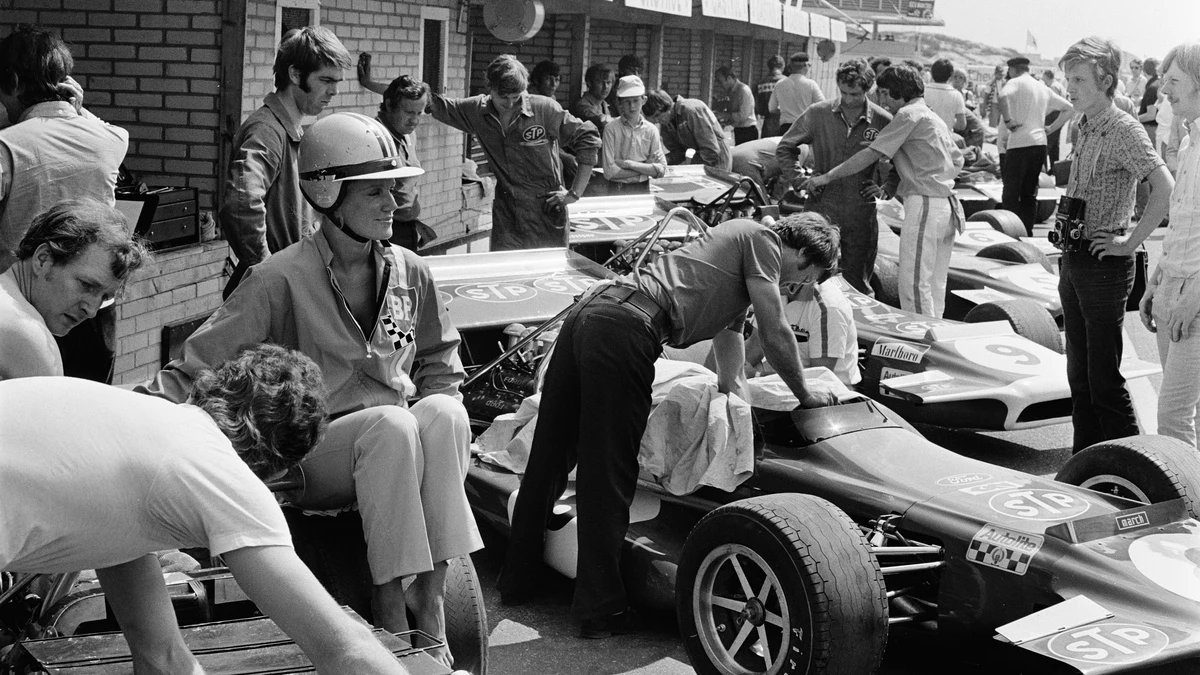
- The 1970s nylon revolution: The introduction of commercial sponsors in 1968 popularized lightweight, water-resistant nylon satin windbreakers with bold chest stripes and embroidered supplier patches.
- The 1980s and 1990s team bomber: Heavier insulated bomber silhouettes with padded shoulders and dense sponsor typography became standard paddock issue across Formula One and touring cars.
- Casual fashion vs safety gear: Paddock jackets served strictly as warm-up and team identification outerwear, distinct from certified fire-resistant Nomex racing overalls worn inside the cockpit.
How Did the Retro Racing Jacket Evolve from Workshop Dusters?
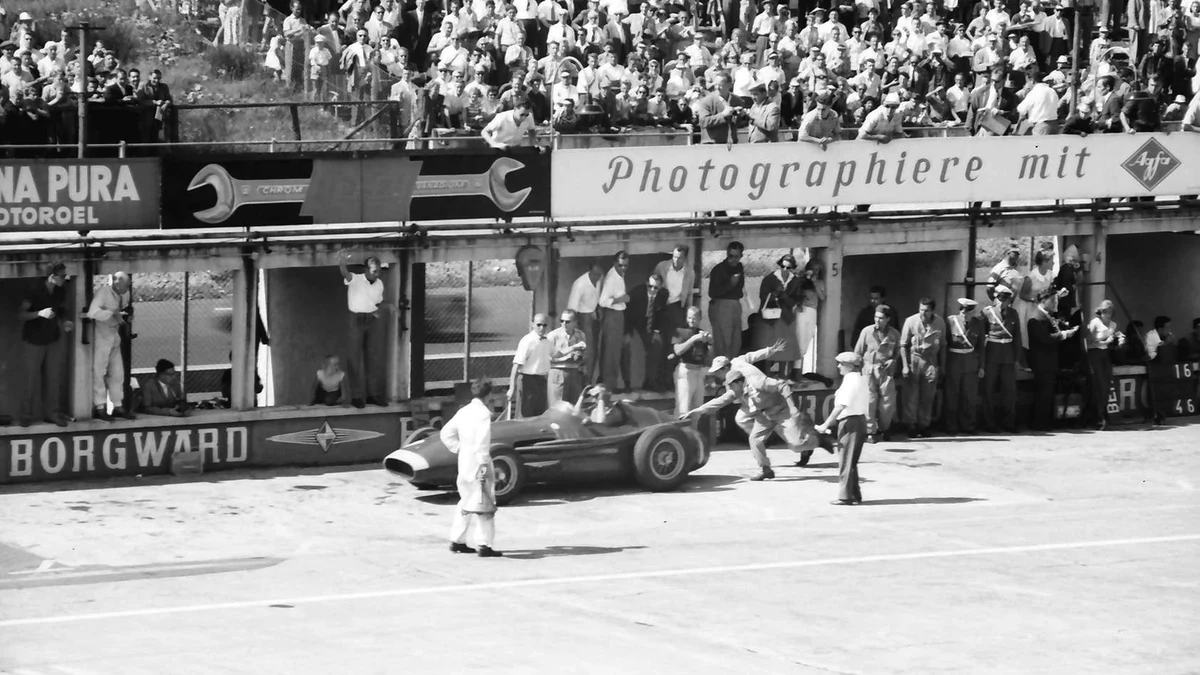
The retro racing jacket evolved from heavy industrial workshop dusters designed to protect mechanics clothing from hot oil, battery acid, and tire soot. In the 1950s, Grand Prix teams operated in open outdoor paddocks, requiring durable garments made from rugged cotton drill or canvas twill.
Constructors including Ferrari, Maserati, and Jaguar issued full-length white, khaki, or navy blue cotton coats to their travelling mechanics. These garments featured deep front patch pockets for holding spark plug wrenches, pressure gauges, and cleaning rags. Sturdy horn or metal buttons allowed mechanics to fasten coats securely, preventing loose fabric from catching in open drive belts or exposed engine fans.
Branding during this era was minimal and understated. A small chain-stitched manufacturer script on the breast pocket or across the back shoulders served as the only identification. Paddock outerwear remained strictly functional workwear, reflecting the blue-collar engineering roots of early Grand Prix competition where mechanics often drove transporters across continents between races.
As motorsport professionalized during the 1960s, teams recognized the need for shorter, more agile garments. Mechanics began altering their long dusters into waist-length shop jackets, providing greater freedom of movement around tight wheel arches and suspension linkages.
On the record: Historical photographs preserved by the Royal Automobile Club show that team mechanics at Brooklands and Silverstone through 1960 were required to wear collared shop coats to maintain formal paddock standards.
What Defined the Design Language of the 70s Racing Jacket?
The design language of the 70s racing jacket was defined by bright nylon satin textiles, contrasting horizontal chest stripes, snap-button storm flaps, and ribbed knit collars. When commercial sponsorship was legalized in 1968, team clothing became high-visibility advertising space.
Fuel suppliers, tire manufacturers, and spark plug makers distributed branded windbreakers to teams, drivers, and track officials. The lightweight nylon shell resisted wind and light rain while displaying brilliant dye colors that matched team liveries on track. Companies such as Grand Prix Sportique, Swingster, and Horizon Sportswear manufactured thousands of jackets for teams and commercial distribution.
Designers utilized distinct tailoring techniques during this decade:
- Color-blocked sleeves: Raglan sleeve cuts with contrasting side stripes matching the vehicle graphic liveries.
- Quilted thermal linings: Diamond-quilted nylon interior batting providing warmth during cold European spring testing sessions.
- Heavy brass zippers: Robust metal closures equipped with large pull rings operable while wearing mechanical gloves.
- Elasticized knit cuffs: Snug ribbed cuffs at the wrists and waist to prevent snagging on pit lane equipment.
- Mandarin stand collars: High snap-fastening collars designed to shield necks from cold morning track winds.
For additional reading on the liveries that inspired these garments, explore our guide on the famous blue and orange gulf livery or the origins of national colors in british racing green.
How Did Teams Arrange Sponsor Patches and Typography?
Teams arranged sponsor patches according to contractual hierarchy, placing primary oil, tire, and component partners on the chest and upper sleeves. The primary entrant or car manufacturer name occupied the dominant position across the upper back.
Embroidered twill patches were sewn securely onto the nylon shell. The right chest typically displayed the primary fuel or oil partner, such as Castrol, Shell, or Gulf, while the left chest featured the vehicle manufacturer emblem alongside the driver or mechanic personal name tag.
Sleeve real estate was allocated to ignition, brake, and spark plug suppliers, including Champion, Ferodo, and NGK. This standardized visual layout allowed television cameras and photojournalists to capture sponsor branding clearly whenever pit crew members leaned over vehicle bodywork during pit stops.
Graphic density grew steadily throughout the decade. Teams introduced secondary sponsor patches on lower pockets and along the zipper placket, creating a layered visual collage that mirrored the increasing commercialization of Grand Prix racing.
How Did Insulated Bomber Jackets Take Over the 1980s Paddock?
Insulated bomber jackets took over the 1980s paddock through the adoption of heavyweight flight-jacket silhouettes with dense multi-sponsor embroidery. As Formula One budgets expanded, teams issued comprehensive matching travel wardrobes to all traveling personnel.
Teams partnered with specialized apparel suppliers like Hugo Boss, Fila, and Linea Sport to create structured jackets with drop shoulders, storm collars, and internal radio harness pockets. The lightweight windbreakers of the 1970s were replaced by insulated outerwear suitable for international air travel and variable circuit weather.
By the 1990s, high-density direct embroidery replaced sewn-on twill patches, resulting in intricate, full-coverage branding across chest, sleeves, and collars that reflected the high-tech image of contemporary Grand Prix engineering. Paddock personnel wore coordinated tracksuits, softshell vests, and padded flight jackets that projected seamless corporate professionalism.
Collectors and enthusiasts today distinguish between genuine team-issue garments and mass-market commercial replicas by examining internal labeling, pocket construction, and embroidery stitch count.
| Era | Dominant Silhouette | Primary Material | Branding Method | Paddock Function |
|---|---|---|---|---|
| 1950 to 1967 | Full-length Duster Coat | Heavy Cotton Drill / Canvas | Direct chain-stitch script | Workshop protection and soil containment |
| 1968 to 1979 | Unlined / Quilted Windbreaker | Nylon Satin / Poly-Twill | Embroidered twill patches | Commercial sponsor display and weather shell |
| 1980 to 1989 | Insulated Bomber Jacket | Heavy Taslan Nylon / Polyester | Mixed patches and direct embroidery | Team uniform and paddock warmth |
| 1990 to 1999 | Technical Parka / Padded Bomber | Microfibre / Gore-Tex laminate | Full-coverage computer embroidery | All-weather professional crew outerwear |
Source: Historical apparel archives of Grand Prix teams and international motorsport photographic collections.
How Do Vintage Outerwear Styles Influence Contemporary Streetwear?
Vintage outerwear styles influence contemporary streetwear because their bold color blocking, vintage typography, and authentic motorsport heritage offer a distinctive alternative to minimalist fashion. Enthusiasts celebrate the historical connection to golden eras of mechanical racing.
Enthusiasts seeking contemporary outerwear inspired by vintage Grand Prix team cuts can view curated silhouettes at kozmozracing.com for everyday casual wear.
When studying classic racing aesthetics, readers can explore our technical articles on what is a livery in racing, historical flag signals in racing flags meaning, or browse the complete Racing Style collection.
How we researched this: This historical retrospective was compiled from period apparel catalogs, archival paddock photography in Motor Sport Magazine, and technical garment design documentation from historic motorsport suppliers.
From the archive mailbag
Are retro racing jackets fire resistant?
No. Retro racing jackets and paddock outerwear were designed strictly for warmth and team identification among pit crew and fans, constructed from standard nylon or cotton. They are not fire-resistant safety garments and should never be used as competition overalls.
What is the difference between a pit jacket and a driver suit?
A pit jacket is a casual outerwear garment worn by mechanics and team personnel for weather protection, while a driver suit is a specialized multi-layer Nomex racing overall certified to FIA or SFI fire-retardant safety standards.
Why did 1970s racing jackets feature so many patches?
Jackets featured multiple patches because teams had commercial sponsorship agreements with various component suppliers, such as tire, oil, spark plug, and brake manufacturers, who each paid for brand placement on team apparel.
What fabrics were used in 1970s windbreakers?
Most 1970s racing windbreakers were fabricated from tightly woven nylon satin with an acrylic coating to provide lightweight wind and water resistance, often lined with diamond-quilted polyester batting.
How can you tell an authentic period team jacket from a replica?
Authentic period team jackets feature period-correct metal zippers, woven brand tags from vintage sportswear manufacturers, and sewn-on embroidered twill patches rather than modern sublimation printing or computerized embroidery.